
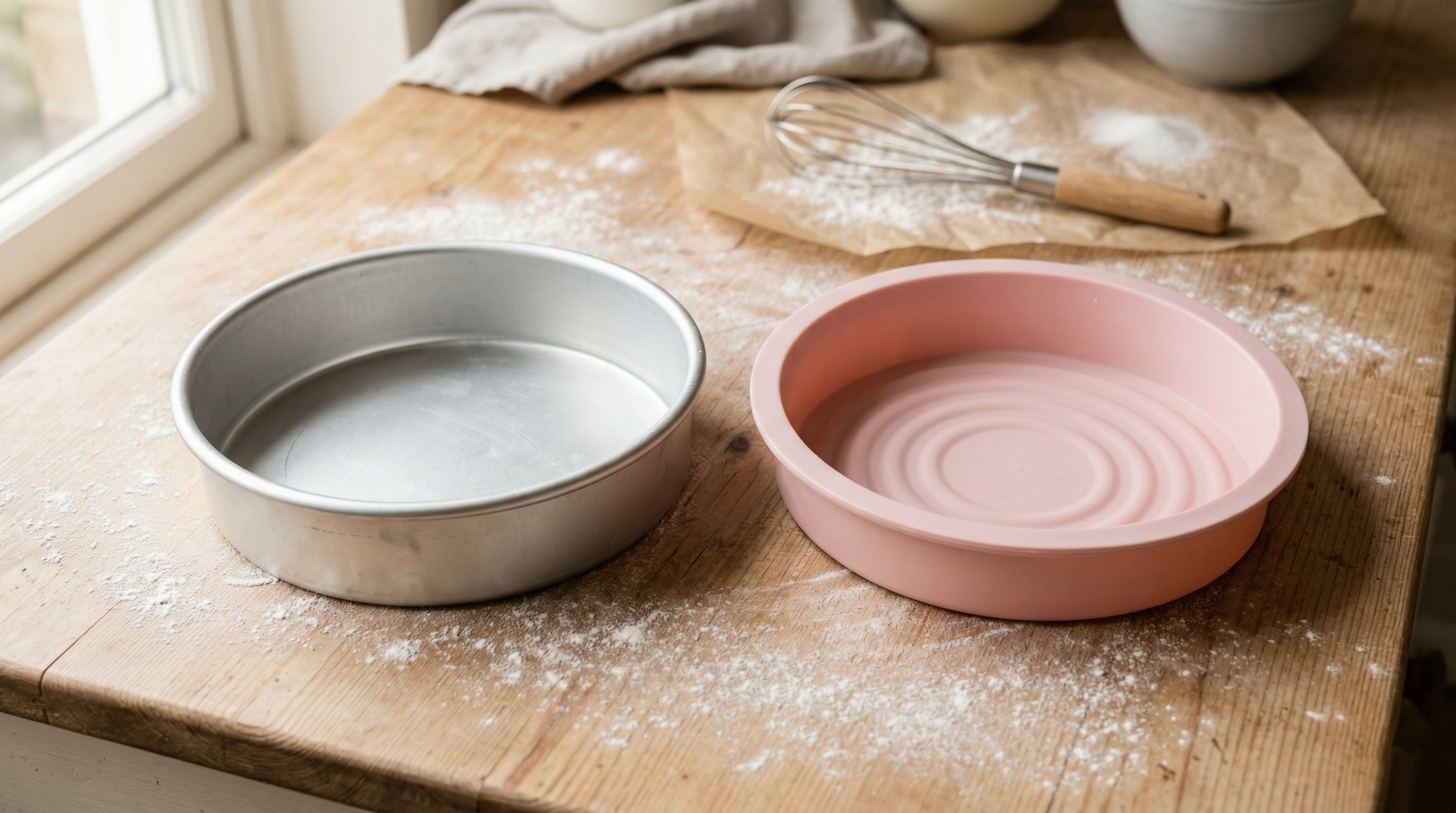
Walk into any baking supplies store — or scroll through Bakeyy's mould collection — and you'll immediately face a choice: silicone or aluminium? Both are popular, both are widely available, and both work. But they don't work the same way, and picking the wrong one for your recipe or baking setup can lead to undercooked centres, pale exteriors, or cakes that just won't release cleanly.
This guide breaks down every important difference — heat conduction, release, durability, cost, and how India's climate adds a unique twist — so you can make a confident, informed choice every time you bake.
The Short Answer (If You're in a Hurry)
- Aluminium moulds are best for layer cakes, sponge cakes, brownies, and any bake where you want an even golden-brown crust and precise results.
- Silicone moulds are best for intricate shapes, mousses, frozen desserts, chocolate setting, and light muffins or cupcakes where easy release matters more than a crisp edge.
- For most Indian home bakers and small bakery businesses, aluminium is the workhorse and silicone is the specialist tool.
Now let's go deep.
1. Heat Conduction: The Single Biggest Difference
This is where the two materials diverge most dramatically, and it affects every aspect of your bake.
Aluminium has a thermal conductivity of approximately 235 W/m·K, making it one of the best heat conductors available in everyday bakeware. Research on thermal conductivity in cooking materials confirms that aluminium heats up quickly and distributes heat evenly across the pan's surface — which is why it has accounted for over 50% of all cookware sold globally for decades. This rapid, even distribution is what gives your cakes those uniform, well-risen results and properly browned edges.
Silicone, by contrast, is a poor conductor of heat. Because it heats up slowly and unevenly, baked goods in silicone moulds tend to brown very little — sometimes not at all on the sides and bottom. The Kitchn's bakeware guide explicitly notes that silicone is best reserved for "very light-coloured cakes, breads, and muffins" precisely because of this limitation. If you're making a classic vanilla sponge and expect golden sides, a silicone mould will disappoint you.
The practical consequence? When switching from aluminium to silicone, most bakers need to either reduce the oven temperature by about 10°C or extend baking time by 5–10 minutes — sometimes both. Thicker batters (like chocolate mud cake) need even more adjustment than lighter sponges.
Verdict: Aluminium wins clearly for heat performance.
2. Non-Stick and Cake Release
Here's where silicone earns its reputation. Because silicone is naturally flexible and non-stick, unmoulding is almost effortless — you simply peel the mould away from the cake rather than the cake from the mould. Food blogs and baking communities consistently highlight that silicone's flexibility makes it ideal for intricate shapes — flowers, animals, geometric patterns — where a rigid metal mould would crack or tear a delicate cake during release.
Aluminium moulds are not naturally non-stick. They require proper preparation every single time: greasing with butter or shortening, dusting with flour or cocoa powder, and often lining the base with parchment paper. Miss any of these steps with a sticky batter — chocolate fudge cake, carrot cake, banana bread — and you'll be serving a patchwork cake instead of a clean layer.
That said, experienced baker Shivesh Bhatia notes a real downside of silicone for baking: you get neither clean edges nor the beautiful golden-brown colour that aluminium delivers. Silicone can give baked goods a slightly "steamed" quality, which is sometimes described as a softer, paler crust. For presentation-focused bakeries and custom cake studios, this matters enormously.
If you need creative shapes or work with mousses and frozen desserts, explore Bakeyy's full range of silicone moulds — they're available in dozens of forms for everything from single portions to layered entremet-style desserts.
Verdict: Silicone wins for release and shapes. Aluminium wins for presentation quality.
3. How India's Climate Changes the Equation
This is a factor most global baking guides don't address — but it's critical for bakers in India.
In large parts of India, kitchen temperatures regularly exceed 30°C for most of the year, and humidity can be extreme (80–90% in coastal cities during monsoon). These conditions affect both materials differently:
Silicone in Indian Heat
Silicone bakeware is rated safe up to approximately 232°C (450°F) by most manufacturers. Food-grade silicone is BPA-free and non-toxic under normal use, but exposing it to temperatures above this threshold can lead to degradation. In an Indian kitchen — particularly in gas-fired ovens with uneven heat distribution — this is worth watching. More practically: silicone's lack of rigidity means it gets floppy in a hot kitchen, which makes transferring a full silicone mould of liquid batter from counter to oven genuinely tricky. Always place your silicone moulds on a rigid baking tray before filling.
Aluminium in Indian Heat and Humidity
Aluminium is resistant to rust — a significant advantage over some other metals in humid Indian climates. However, it can warp if exposed to sudden temperature changes or if thin-gauge moulds are used at high heat. PotsandPans India notes that aluminium is also susceptible to scratches and is best hand-washed rather than put in dishwashers — relevant for home bakers who may be tempted to use their washing machine to clean up quickly.
One more India-specific consideration: many home ovens in India are OTGs (oven toaster grills), not convention ovens. OTGs often have less consistent heat distribution and can have hot spots. In this scenario, aluminium's superior heat conduction is especially valuable — it compensates for uneven oven heating better than silicone does.
Browse Bakeyy's aluminium cake mould collection, which includes standard round, square, and specialty shapes suited to both OTG and convention ovens.
4. Durability and Lifespan
Both materials are long-lasting with proper care — but they degrade differently.
Aluminium can warp if you wash it under cold water immediately after removing it from a hot oven (thermal shock). Thin-gauge aluminium is particularly prone to this. A quality, thicker-gauge aluminium mould, however, can last for years of regular use. Avoid using metal utensils inside aluminium moulds as they can scratch the surface. Anodised aluminium — aluminium treated with an electrochemical process to create a harder, non-reactive surface — offers even better durability and resists scratching better than standard aluminium.
Silicone is stain-resistant, odour-resistant, and flexible enough that it doesn't crack or chip. It transitions easily between oven, microwave, and freezer, which is a real advantage if you're making multilayer desserts that require setting in the freezer before serving. Silicone does, however, absorb strong odours over time (onion, garlic, intense spices) — so keeping dedicated baking-only silicone separate from your savoury cooking moulds is advisable.
Low-quality silicone is an issue in the Indian market. Cheap silicone can be mixed with fillers that smell when heated, may not be food-safe at high temperatures, and lose their shape quickly. Always buy from a trusted supplier and look for food-grade certification. Bakeyy's silicone moulds are curated for quality and consistent performance.
Verdict: Both are durable with care. Aluminium tends to have a longer functional lifespan for high-frequency baking.
5. Price and Value for Money
Aluminium moulds are consistently more affordable than comparable silicone moulds in India. A good-quality aluminium round cake tin — the workhorse of every bakery — is one of the lowest-cost tools you'll buy relative to how much use it gets.
Silicone moulds vary widely in price. Basic shapes (muffin trays, simple round moulds) are affordable, but specialty silicone moulds — entremets rings, petal moulds, detailed character shapes — can cost significantly more. The trade-off is that you get complexity and creativity that aluminium simply cannot provide.
For a home bakery starting out on a limited budget, the recommended approach is: invest in two or three quality aluminium cake tins first (a 6-inch and an 8-inch round are the most used), then gradually add silicone moulds for specific decorative projects as your client base grows.
Check Bakeyy's full bakeware collection to compare options across price points. If you're ordering regularly for a small bakery, consider the Bakeyy Super programme for wholesale pricing advantages.
6. What Each Mould Is Best For: A Practical Cheat Sheet
Use Aluminium Moulds For:
- Layer cakes and sponge cakes — even heat gives uniform rise and the golden crust that holds frosting well.
- Brownies and bars — aluminium's heat conduction creates the fudgy, crinkly-top texture that defines a good brownie. Pair with Bakeyy's metal bakeware range for square and rectangular options.
- Pound cakes and butter cakes — dense batters need consistent heat throughout; aluminium delivers this more reliably than silicone.
- Bread loaves — the crisp bottom crust of a banana bread or milk bread comes from direct metal contact.
- Any bake you're doing in an OTG — compensates for uneven oven heat distribution.
Use Silicone Moulds For:
- Intricate decorative shapes — anything with fine detail (geometric patterns, florals, characters) that aluminium cannot replicate.
- Mousses and no-bake desserts — silicone is ideal for setting mousses, panna cottas, and gelatin-based desserts in the fridge or freezer. Silicone is particularly favoured for frozen desserts because the flexibility makes unmoulding from frozen a breeze.
- Chocolate bonbons and pralines — silicone's non-stick surface is perfect for moulding and releasing chocolate without tempering issues.
- Mini cupcakes and individual portions — the variety of silicone mini mould shapes at Bakeyy means you can serve presentation-perfect individual desserts without paper liners.
- Beginner bakers making their first shaped cakes — the forgiving non-stick surface reduces "stuck cake" disasters.
7. Can You Use Both in the Same Bake?
Yes — and many professional bakers do exactly this. A common technique for layered entremet cakes is to bake the sponge base in an aluminium tin (for even baking and structure), then use a silicone ring mould for the mousse layers that are set in the freezer. This combines the best of both materials: aluminium's baking performance with silicone's unmoulding ease for delicate layers.
Similarly, you might bake vanilla cupcakes in a metal muffin tray with paper cupcake liners, then use a small silicone mould to set a chocolate dome garnish for the top.
8. Tips for Getting the Best Results from Each Material
Aluminium Mould Tips
- Always grease and line. Don't skip this step. Butter the sides generously, dust with flour (or cocoa for chocolate cakes), and line the base with parchment.
- Don't plunge into cold water after baking. Let the mould cool naturally to avoid warping.
- Use light-coloured aluminium for even browning. Darker pans absorb more heat and can over-brown exteriors. Light-coloured or shiny metal bakeware is best for even browning.
- Hand wash only. Dishwashers can cause discolouration and dull the surface over time.
- Don't store acidic foods (lemon curd, tomato-based items) in an aluminium mould. Aluminium can react with acids and impart a metallic flavour.
Silicone Mould Tips
- Always place on a rigid baking tray before filling. Silicone has no structural support; a liquid batter will slosh and spill if you carry it unsupported.
- Reduce temperature slightly or increase time. Start by adding 5–10 minutes to your usual baking time, or lower the temperature by 10°C, and test with a skewer. Experts recommend adding 3–15 minutes or adjusting temperature by 5–15°C when using silicone.
- A light greasing can still help for very delicate cakes. Although silicone is non-stick, a quick spray of oil helps if you're baking a very butter-rich or egg-heavy batter.
- Check for food-grade quality. Do the "white paper pinch test" — pinch a thin part of the mould and twist. If white shows, the silicone contains fillers and is lower quality. Food-grade silicone stays the same colour when pinched.
- Keep separate from savoury silicone tools. Silicone absorbs smells over time — a silicone mould that's been used to mould onion bhajis will transfer that flavour to your vanilla panna cotta.
9. A Quick Comparison Table
| Feature | Aluminium Mould | Silicone Mould |
|---|---|---|
| Heat conduction | Excellent (235 W/m·K) | Poor |
| Browning/crust | Even golden-brown crust | Minimal browning |
| Non-stick | No — needs greasing | Yes — naturally non-stick |
| Unmoulding ease | Moderate (needs prep) | Very easy (peel away) |
| Shape variety | Standard shapes (round, square, loaf) | Unlimited intricate shapes |
| Freezer safe | Yes | Yes (better for frozen desserts) |
| Oven safe temp | Up to 260°C (500°F) | Up to 232°C (450°F) |
| Durability | Long-lasting if cared for | Long-lasting, flexible |
| Price | More affordable | Variable (basic to premium) |
| Best for OTGs | Yes | Less ideal |
| Best for mousses | No | Yes |
10. Which Should You Buy First?
If you're just starting out, your first purchase should be an aluminium round cake tin — a 6-inch and an 8-inch will cover the vast majority of recipes you'll encounter. From there, add a square aluminium tin for brownies, then a loaf tin for banana bread and pound cakes.
Once your baking grows and you start taking on custom cake orders — shaped novelty cakes, mousse desserts, chocolate-dipped bonbons — that's the right moment to invest in quality silicone moulds for specific projects.
You can explore Bakeyy's complete aluminium cake moulds collection and silicone moulds collection to compare sizes and shapes. Both are available at wholesale-friendly prices, which is particularly useful if you're stocking up for a home bakery or small commercial kitchen.
Don't forget the supporting tools: a good cake turntable and quality cake scrapers make frosting and finishing a breeze regardless of which mould you bake in.
Final Thoughts
The silicone vs aluminium debate doesn't have a single winner — it has a context. Aluminium is your reliable everyday tool: fast, efficient, and consistent. Silicone is your creative specialist: flexible, forgiving, and perfect for shapes and no-bake applications that aluminium simply can't do.
The best-equipped bakers have both on their shelf and know exactly when to reach for each one. Start with aluminium, bake with confidence, and add silicone strategically as your recipes grow more adventurous.
Browse the full Bakeyy bakeware collection to find moulds, tins, turntables, piping bags, scrapers, and every other tool you need — all sourced for Indian bakers, at wholesale prices.
Frequently Asked Questions
Can I use a silicone mould in an OTG oven?
Yes, food-grade silicone is oven-safe up to 232°C (450°F), which covers the range most OTGs operate in. However, because silicone doesn't conduct heat as well as aluminium, results in OTGs may be inconsistent. Always place the silicone mould on a metal baking tray for stability and support.
Do I need to grease a silicone mould?
Technically, no — silicone is naturally non-stick. However, for very rich or sticky batters (dense chocolate cakes, carrot cake), a light spray of oil before adding the batter gives extra insurance for a clean release.
Is aluminium bakeware safe to use?
Yes. Aluminium bakeware is widely considered safe for baking. To minimise any interaction with food, avoid baking very acidic dishes (lemon, tomato) directly in uncoated aluminium, or choose anodised aluminium, which has a non-reactive hard surface.
Which mould is better for a beginner?
Aluminium for baking results, silicone for ease of unmoulding. If you're likely to struggle with a cake sticking, start with silicone. But if your priority is learning to bake with proper results — an even rise, a golden crust — an aluminium mould with proper greasing will teach you better habits and give you more consistent outcomes over time.
Where can I buy quality moulds in India?
Bakeyy.com stocks both aluminium cake moulds and silicone moulds at wholesale prices with pan-India delivery, making it a reliable option for home bakers and small bakery businesses alike.