

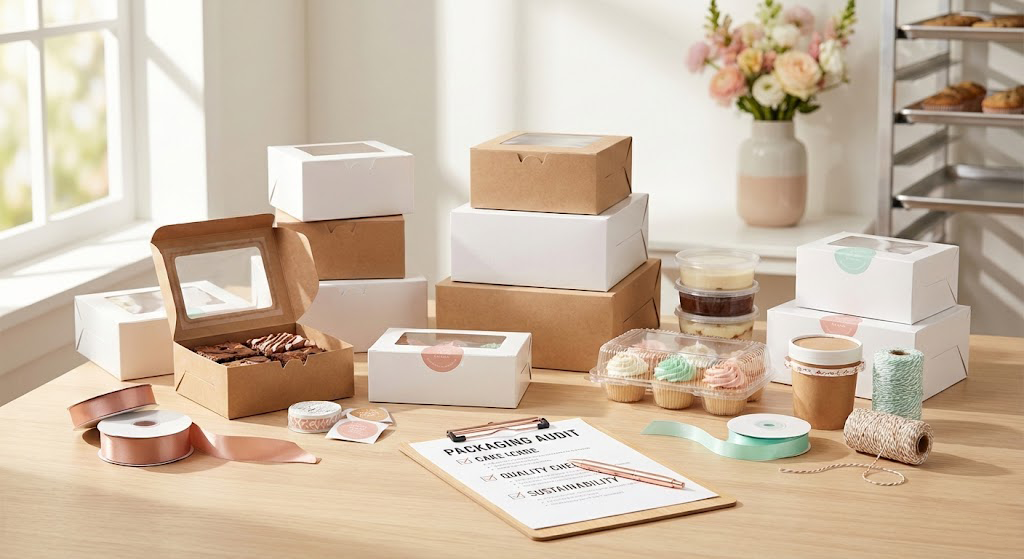
Choosing the right bakery packaging supplier is not just about finding boxes and bags. It is about finding a partner who understands your business, supports your growth, and delivers consistent quality without breaking your budget. Whether you are a home baker shipping 20 orders a month or a commercial bakery fulfilling hundreds of daily orders, the wrong supplier can cost you thousands in wasted inventory, damaged goods, and lost customers.
After working with bakery owners across India for years, we have seen every mistake in the book. Suppliers who vanish after the first order, boxes that collapse during delivery, pricing that mysteriously increases after you are locked in, and minimum order quantities that force small businesses to stock a year worth of packaging they will never use.
This checklist will help you avoid these pitfalls. These are not theoretical questions. They are battle tested filters that separate reliable suppliers from ones who will waste your time and money.
1. What Are Your Minimum Order Quantities, Really?
This is where most bakery owners hit their first wall. A supplier says low MOQs on their website, then you find out it is 5,000 pieces per design. If you are doing 200 orders monthly across 5 different cake sizes, that is 25,000 pieces total. Over 10 months of inventory for a home baker.
What to ask: What is your MOQ for standard sizes? Can I mix sizes to meet minimums? What about custom printing?
What good looks like: Quality suppliers serving bakeries should offer 100 to 500 piece MOQs for standard sizes like cake boxes, brownie boxes, and cupcake containers. For custom printing, 1,000 to 2,000 pieces is reasonable. Some suppliers allow mixed MOQs where you can combine cookie boxes, dessert tubs, and cake boxes to hit minimums.
Red flag: Suppliers who are not upfront about MOQs or keep changing numbers after you have invested time in samples and quotes. This signals poor inventory management or bait and switch tactics.
2. Do You Stock Standard Bakery Sizes or Only Custom?
The Indian bakery market has fairly standardized sizes for common items. A 6 inch cake box, 500g brownie box, 6 count cupcake box, and standard cookie tins. Suppliers who stock these ready to ship items understand the bakery business. You can get your packaging in 2 to 3 days instead of waiting 3 to 4 weeks for custom production.
Why this matters: Stock availability means you can scale quickly. When you get a large corporate order or festival rush, you can reorder immediately. Custom only suppliers lock you into 2 to 4 week lead times, which means you either carry massive inventory or risk running out during peak season.
What to look for: Check if they have stock listings on their website. Quality suppliers will have multiple cake box sizes from 4 inch to 14 inch, brownie boxes in various configurations, cupcake boxes for 2, 4, 6, 12, and 24 pieces, and dessert packaging readily available.
Pro tip: Ask for their current stock levels on your top 3 sizes. If they hem and haw or say everything is made to order, that is a warning sign.
3. What Is Your Actual Delivery Timeline and Do You Ship Pan India?
A supplier in Mumbai who quotes 3 days delivery to Bangalore might actually mean 3 days after dispatch, which could be 2 weeks after your order. Or they might not ship to Tier 2 and Tier 3 cities at all, leaving you scrambling for local alternatives.
Critical questions: What is your dispatch timeline for stock items versus custom items? Do you ship to my city? What courier partners do you use? Can I track my shipment?
What reliability means: Stock items should ship within 24 to 48 hours across major metros. Custom items with printing typically need 7 to 10 days. A good supplier will give you tracking details immediately and use reliable couriers like Delhivery, BlueDart, or DTDC for fragile packaging materials.
Watch out for: Vague promises like we will try our best or suppliers who only ship to metros. Your bakery growth depends on reliable logistics, not maybes.
4. Can I See Physical Samples Before Bulk Ordering?
Photos lie. That cake box that looks sturdy online might be flimsy cardboard that crushes under the weight of a 2 pound cake. The color you see on screen might be completely different from the actual product.
Why samples matter: You need to test the packaging with your actual products. Put your brownie in that brownie box. Does it fit? Does the lid stay closed during transport? Does it look professional when you hand it to a customer? You cannot know this from photos.
How samples should work: Professional suppliers will send you sample packs for a nominal charge or free for bulk buyers. They understand that you need to test before committing to hundreds or thousands of pieces. They should offer samples of cake boxes, cupcake packaging, cookie boxes, and other items you are considering.
Never: Place a bulk order without testing physical samples. This is how you end up with 2,000 unusable boxes sitting in your storage.
5. What Is Your Quality Control Process?
Inconsistent packaging quality kills your brand. One batch has sturdy boxes, the next batch arrives with boxes that are slightly smaller, different color, or poor glue quality. Your customer opens their cake and the box falls apart.
Questions to ask: How do you ensure consistency across batches? What happens if I receive defective products? Do you have a replacement policy? Can I inspect goods before accepting delivery for large orders?
Quality indicators: Good suppliers will talk about their manufacturing process, quality checks at various stages, and have clear policies for defects. They should guarantee that your cake base boards are always the same thickness, your tin boxes close properly, and your packaging supplies meet food safety standards.
Red flag: Suppliers who say everything is perfect or have no formal quality control or return process. Manufacturing defects happen. You want a partner who handles them professionally.
6. Are Your Materials Food Safe and Do You Have Certifications?
This is non negotiable. Your packaging comes in direct contact with food. Using non food grade materials can leach chemicals into your cakes and brownies, making customers sick and destroying your reputation.
What you need: Food grade certification for all packaging that touches food. This includes cake boxes, brownie boxes, cupcake liners, dessert containers, and cake boards. Suppliers should provide documentation proving their materials meet FSSAI standards for food contact materials.
Beyond certifications: Ask about the source of their materials. Recycled cardboard is fine for outer boxes but should never be used for surfaces that touch food directly. Inks used for printing should be food safe. Your bakery packaging should not have any chemical smell.
Deal breaker: Any supplier who cannot provide food safety certifications or gets defensive when you ask. Your business license and customer health depend on this.
7. What Is Your Pricing Structure and Payment Terms?
Price per unit is just the starting point. You need to understand the full cost structure. Some suppliers quote attractive per piece rates but then add separate charges for printing, separate charges for delivery, GST is extra, and suddenly your costs are 40% higher than the original quote.
Get clarity on: Are prices all inclusive or will there be additional charges? What are the payment terms? Do you offer credit for regular customers? Are there volume discounts? What happens if I need to scale up suddenly?
Fair pricing practices: Professional suppliers provide tiered pricing based on volume. Buy 500 brownie boxes at one price, buy 2000 at a lower per unit cost. They should clearly state if GST is included, what shipping costs, and if there are setup charges for custom printing.
Warning sign: Prices that seem too good to be true usually are. Rock bottom pricing often means compromised quality, unreliable delivery, or hidden costs that appear later. Calculate your total cost per unit including all fees and shipping before comparing suppliers.
8. Can You Handle Seasonal Spikes and Rush Orders?
Bakery demand is not linear. Diwali, Christmas, Valentine's Day, wedding season. You might do 100 orders in a normal month and 500 orders in December. Your supplier needs to scale with you or you will run out of packaging supplies during your biggest revenue month.
Questions to ask: What is your typical lead time during festival seasons? Do you stock up before major festivals? Can you handle rush orders if I suddenly get a large corporate contract? What is your capacity for custom printed orders?
Reliable suppliers: Plan ahead for peak seasons. They stock up on popular items like gift hamper boxes, goodie boxes, and chocolate boxes before Diwali and Christmas. They have relationships with multiple manufacturers so they can meet urgent demand. They keep you informed about potential delays well in advance.
Problem suppliers: Go radio silent during peak season. Suddenly their lead times triple and they cannot accommodate your orders. This leaves you scrambling to find alternatives at premium prices or disappointing customers.
9. What Is Your Range Beyond Basic Boxes?
A complete bakery packaging supplier should be your one stop shop. Boxes are just the start. You also need cake boards, ribbons, tags, bags, cake toppers, and disposables. Multiple suppliers mean multiple invoices, multiple deliveries, and coordination nightmares.
Comprehensive suppliers offer: Complete packaging systems. They stock cupcake boxes and matching cupcake liners. Cake boxes with coordinating cake boards and cake bags. They also carry shredded paper for cushioning, decorative items, and even baking ingredients and bakeware.
Why this matters: Consolidating purchases with one supplier saves you time, often gets you better pricing through volume, and ensures your entire packaging aesthetic coordinates. When you need to rush order supplies before a big event, having one trusted source is invaluable.
10. Do You Offer Customization and What Are the Real Costs?
Your packaging is your brand. Custom printed boxes with your logo and colors make you look professional and memorable. But customization costs vary wildly between suppliers, and some have hidden charges that make custom packaging unaffordable for small bakeries.
Key questions: What are the setup charges for custom printing? What is the MOQ for custom printed boxes? How many colors can I use? Can I see proofs before production? What is the turnaround time? Can I reorder without paying setup charges again?
Fair customization terms: Setup charges for printing plates typically range from 2,000 to 5,000 rupees depending on complexity. MOQs for custom printed packaging should be 500 to 1,000 pieces minimum. Suppliers should provide digital proofs for approval before printing. Once you have approved a design, reorders should not incur setup charges again.
Budget alternative: If full custom printing is too expensive initially, look for suppliers who offer sticker labels or stamps that you can apply to plain boxes. This lets you brand your packaging affordably while you build volume.
Watch out for: Suppliers who charge setup fees on every reorder or have complicated pricing with per color charges, per box charges, and various other fees. Get everything in writing before committing.
11. How Responsive Is Your Customer Service?
You will have questions. You will have problems. You will need to change orders or get urgent replacements. Your supplier's customer service quality directly impacts your ability to serve your customers.
Test their responsiveness: Before placing large orders, test their communication. Send inquiries via email, WhatsApp, and phone. How quickly do they respond? Are answers helpful and detailed or vague and evasive? Do they understand bakery specific needs or are they generic packaging suppliers?
Good customer service looks like: Quick responses within 24 hours. They understand your business cycles and proactively remind you to stock up before peak seasons. When problems occur, they own them and fix them fast. They provide multiple contact options including WhatsApp for urgent queries. They assign you a dedicated account manager once you become a regular customer.
Red flags: Slow responses, generic copy paste answers, no one available after business hours, or they become hard to reach after receiving payment. These suppliers treat you as a transaction, not a partner.
12. What Happens When Things Go Wrong?
Things will go wrong eventually. A shipment gets delayed. Boxes arrive damaged. The print quality is not what you expected. How a supplier handles problems tells you everything about whether they are worth working with long term.
Ask upfront: What is your policy for damaged goods in transit? What if the product does not match my sample? What if there is a manufacturing defect? Do you offer refunds or only replacements? Who pays for return shipping?
Professional policies: Quality suppliers stand behind their products. Damaged goods in transit get replaced at no charge to you. Manufacturing defects get immediate replacements. If the product genuinely does not match what you ordered, they make it right. They have clear written policies you can refer to.
What you want to avoid: Suppliers who blame the courier for everything, make you jump through hoops to get replacements, or have a no returns policy. Problems are inevitable in supply chains. You need a partner who solves them, not one who makes them your problem.
Document everything: When you receive damaged goods, take photos and videos immediately before opening the full shipment. This documentation protects you in disputes.
13. Can I See Reviews or Talk to Other Bakery Customers?
Anyone can claim to be the best supplier. Real feedback from actual bakery owners tells you what working with them is truly like. Not the polished marketing version.
Do your research: Check Google reviews, Facebook pages, Instagram comments. Look for reviews from actual bakery businesses, not just positive testimonials on their website. Established suppliers should have dozens or hundreds of reviews with detailed feedback.
What to look for in reviews: Consistency over time. Are recent reviews as positive as old ones or has quality declined? How do they respond to negative reviews? Do reviewers mention specific products like cake boxes or brownie boxes or is everything vague? Do multiple reviews mention the same problems?
Ask for references: Do not be shy about asking the supplier for contact information of 2 to 3 customers you can speak with. Professional suppliers are happy to provide references because they know their existing customers will vouch for them.
14. Do You Understand the Specific Needs of Bakery Packaging?
Bakery packaging is not the same as generic packaging. Your products are delicate, perishable, and often have special transport requirements. A supplier who understands this designs better solutions.
Bakery specific knowledge: They should know that cakes need sturdy bases and boxes with enough height clearance for decorations. Brownie boxes need grease resistant lining. Cookie packaging needs to prevent crushing. Macarons require boxes that prevent movement. Dessert tubs need to be leak proof.
Test their expertise: Describe your products and ask what packaging they recommend. A knowledgeable supplier will ask questions about product weight, transport distance, typical weather conditions, and storage before making suggestions. They understand that a 2 kg cake needs different engineering than a dozen cupcakes.
Generic suppliers: Treat everything the same. They sell boxes without understanding what goes inside. This leads to packaging failures, damaged products, and unhappy customers. You want a supplier who is essentially a packaging consultant for your bakery.
15. What Is Your Track Record and How Long Have You Been in Business?
The packaging supply business has a lot of fly by night operators. They appear with attractive prices, fulfill a few orders, then vanish when problems arise or when something more profitable comes along. You need a supplier who will be around in 2 years when you are doing 10x your current volume.
Stability indicators: How long have they been in the bakery supply business? Do they have a physical location or just an online presence? Do they have an established customer base? Have they grown steadily or do they keep changing their business focus?
Why experience matters: Suppliers who have been serving bakeries for several years understand seasonal patterns, common problems, and have established relationships with manufacturers. They can navigate supply chain disruptions better. They have financial stability to offer credit terms. They are invested in long term relationships, not quick profits.
Do not dismiss newer suppliers entirely: Some new companies bring innovation and better service. But verify they have proper backing, understand the industry, and are serious about building a sustainable business. Start with small orders to test them before committing to large contracts.
Making Your Decision
Finding the right bakery packaging supplier is like finding a business partner. You will work with them for years, through busy seasons and slow periods, through growth and challenges. Taking the time upfront to ask these 15 questions will save you countless headaches and thousands of rupees down the line.
Do not rush this decision. Order samples from multiple suppliers. Test their products with your actual baked goods. Compare not just prices but the complete package of quality, reliability, customer service, and range. Talk to their existing customers. Check their certifications. Test their responsiveness.
The right supplier becomes an extension of your business. They help you solve problems, suggest improvements, support your growth, and make your brand look professional. The wrong supplier creates constant stress, forces you to compromise on quality, and holds back your business growth.
Start small with any new supplier. Place one or two test orders before committing to large quantities. Evaluate their performance on delivery times, product quality, and how they handle any issues that arise. Once they prove themselves, you can confidently scale up your orders.
Remember that your packaging is often the first physical touchpoint customers have with your brand. It protects your products, yes, but it also communicates your values and attention to quality. Invest in finding a supplier who helps you present your bakery in the best possible light.
Whether you need cake boxes, brownie packaging, cupcake boxes, cookie packaging, dessert containers, or complete bakery packaging supplies, use this checklist to find a supplier who truly understands and supports your bakery business.
Your packaging supplier choice is too important to leave to chance or lowest price. Ask these questions, evaluate the answers carefully, and choose a partner who will help your bakery succeed.
1 thought on "Bakery Packaging Supplier Checklist: 15 Questions Before You Buy"
A highly insightful and practical guide that goes beyond basic advice and truly highlights the importance of choosing the right bakery packaging supplier. The detailed checklist and real-world scenarios make it बेहद useful for both small bakers and growing businesses. It effectively helps readers avoid common mistakes while focusing on quality, reliability, and long-term partnerships.