
A good cake stand does a lot more work than most people give it credit for. It lifts your bake to eye level so guests actually notice it, it keeps the base of the cake away from crumbs and spills on the table, and it gives a dessert counter or party table the kind of structure that makes everything look planned. Pick the wrong one, though, and you end up with a stand that wobbles under a heavy cake, a tier that can't fit your cupcakes, or a dome that is too short for the frosting you piped so carefully.
This guide walks you through every type of cake stand you are likely to come across, from simple metal cupcake tiers to acrylic domes, anti-gravity stands and rotating display units. You will find size charts, a quick comparison table, guidance on how many tiers you need for different guest counts, and answers to the questions home bakers and bakery owners ask us most often. Every stand mentioned here is available in the Bakeyy cake stands collection.

Quick Answer: Which Cake Stand Should You Buy?
If you are short on time, here is the simple version. For whole cakes at home, a single tier stand with a plate about 2 inches wider than your cake is the most useful thing you can own. For cupcakes and small treats, a 3 tier metal stand suits most parties. If you need to keep bakes covered at a counter or outdoor event, choose a stand with an acrylic dome. For weddings, a floating tier spacer adds height to a tiered cake, and for dessert tables and launches, an anti-gravity, rotating or levitating stand gives you a real focal point. The rest of this guide explains each choice in detail so you can buy with confidence.
Why the Right Cake Stand Matters
When people think about presentation, they usually focus on the cake itself: the frosting, the toppers, the colours. The stand is what frames all of that. A cake placed flat on a table disappears among plates and glasses, while the same cake raised a few inches immediately becomes the centre of attention. That height is also practical, because it makes cutting and serving easier and keeps the cake out of the way of elbows and sleeves.
For home bakers, a stand turns a birthday cake into something that looks right in photos. For small bakery and cafe owners, stands are part of how you sell. A well-arranged display counter with cupcakes on tiers and a covered cake under a dome signals freshness and care, and customers are far more likely to pick something they can see clearly. For event planners and dessert table stylists, a mix of stand heights is the easiest way to create a layout that feels full without overcrowding.
The Main Types of Cake Stands
Cake stands come in a wider range of styles than most buyers expect. Each type is built for a slightly different job, so it helps to understand what each one does best before you choose.
Single tier cake stands
A single tier stand is a flat round plate on a pedestal or base. It is the most versatile option and the one most households should own first, since it works for everything from a simple sponge to a fully decorated fondant cake. The 10 inch round detachable cake stand is a good example. It separates into two pieces, which makes it easier to wash and store in a small kitchen cabinet.
Multi-tier cupcake stands
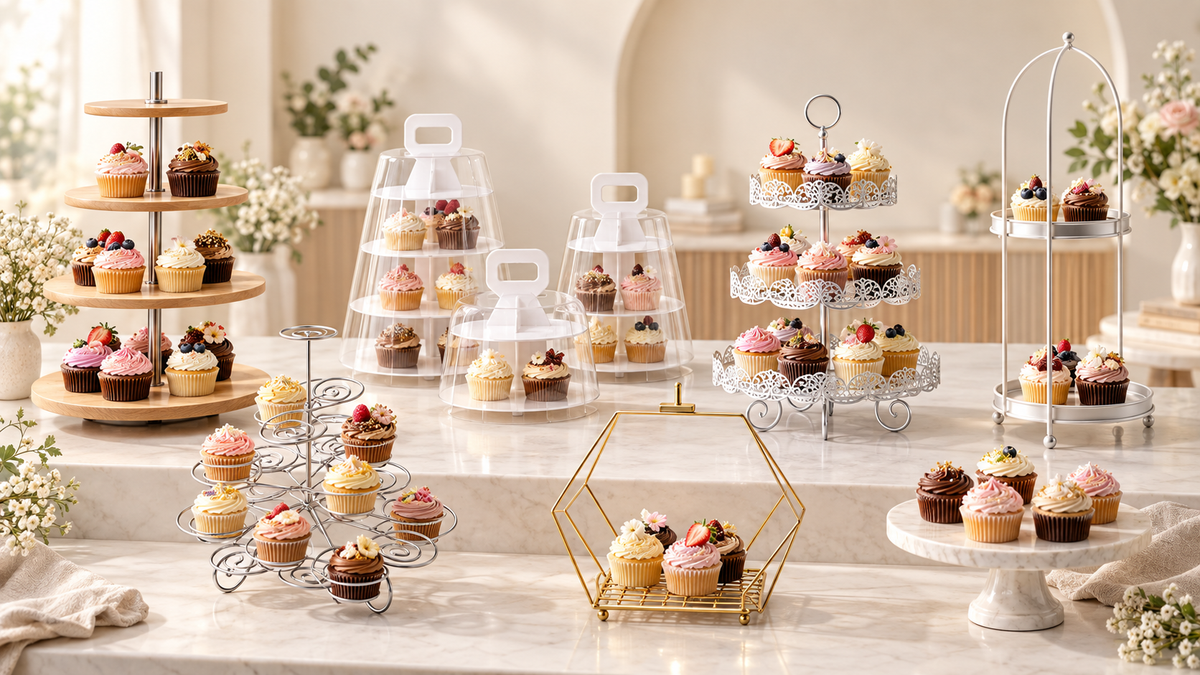
Tiered stands stack two, three or four plates on a central rod or frame, which lets you display a lot of small bakes in a small footprint. They are the standard choice for cupcakes, macarons, brownies, cookies and mini tarts. Metal versions are the most common because they are sturdy, light and easy to clean.
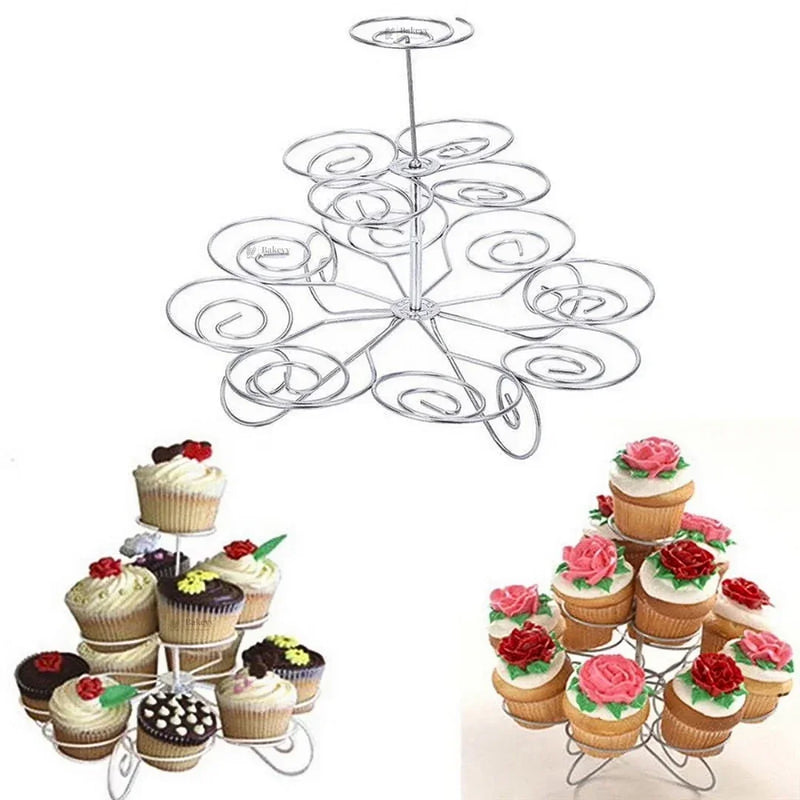
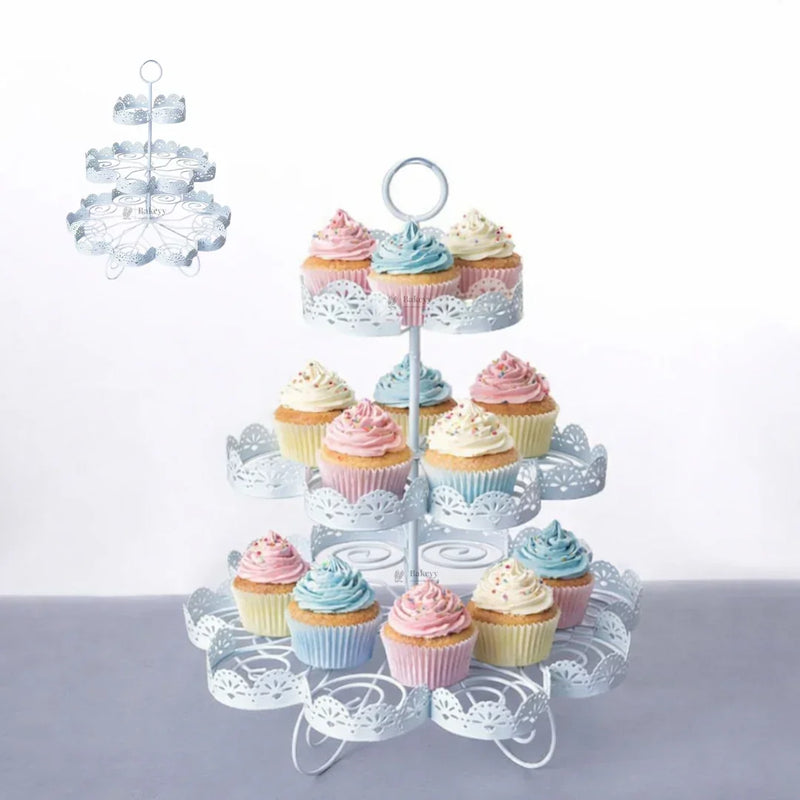
Bakeyy carries several metal options at different price points. The three-tiered cupcake stand comes in rose gold, gold and silver and is one of the most affordable ways to start. The 3-tier metal cupcake stand with spiral holders holds 13 pieces, with each cupcake sitting in its own ring so nothing slides off when the stand is moved. If you prefer something more ornamental, the 3-tier metal stand with decorative cutwork and the cutwork stand with multiple design options add detailed patterns that look lovely at weddings and festive events. For a more modern look, the 2 tier metal cupcake stand comes in plain white or black.
Cupcake stands with dome covers
A tiered stand with a clear dome gives you the display benefits of tiers while protecting bakes from dust, insects and air. This is especially useful in Indian weather, where buttercream and whipped cream can soften quickly and flies are a constant concern at outdoor functions. The cupcake stand with transparent dome cover is available in 2, 3 and 4 tier versions, so you can match it to the size of your batch.
Acrylic cake domes with wooden bases
A cake dome is a single tier stand paired with a tall transparent cover. It is the classic cafe counter setup, and it works just as well at home for keeping a cake fresh over a day or two. The wooden base adds warmth and looks right in both rustic and modern spaces. Bakeyy offers the premium acrylic cake dome with wooden base in two sizes, and a larger 12 inch premium cake stand with acrylic dome that has a smooth round acrylic handle on top for easy lifting.

Anti-gravity cake stands
Anti-gravity stands use offset rods and platforms so that tiers appear to float at different heights and angles. They make a strong visual statement at birthdays, baby showers and dessert tables. The 4 tier anti-gravity cake stand uses wooden pads with metal rods and works for both small cakes and cupcakes, so you can mix items on a single stand.
Floating tier spacers
A tier spacer sits between two cake tiers and raises the top one, leaving an open gap in the middle that you can fill with flowers, fairy lights or decorations. The white metal floating tier spacer is popular for wedding cakes because it makes a two tier cake look taller and more elaborate without adding another layer of sponge. Pair it with artificial flowers to fill the gap.
Rotating and levitating display stands
Motion draws the eye, which is why rotating stands work so well in shop windows, exhibitions and product launches. The automatic rotating dessert display stand keeps desserts turning slowly so every side gets seen. At the premium end, the magnetic levitation platform with LED lights suspends a small cake or decoration in mid-air while it rotates, which makes it a real conversation piece for launches and high-end events.
Cupcake carriers
Strictly speaking a carrier is not a display stand, but it solves the problem every baker faces once the cupcakes are done: getting them somewhere without damage. The 13 cavity round cupcake carrier with lock lid holds each cupcake in place and locks shut, so you can transport, store or even gift a batch.
Metal display baskets
For cookies, chocolates, rusks and dry treats, a shallow metal basket can double as a serving stand. The gold powder metal 1 layer basket works on a dessert table, as a hamper base, or as a decorative tray at home.
Cake Stand Comparison Table
If you want a quick way to narrow down your options, this table sums up what each type is best for and where it fits.
| Stand type | Best for | Ideal setting | Protects from dust |
|---|---|---|---|
| Single tier stand | Whole cakes, cheesecakes, tarts | Home, birthdays, cafes | No |
| 2 to 4 tier metal stand | Cupcakes, macarons, cookies, brownies | Parties, bakery counters, weddings | No |
| Tiered stand with dome | Cupcakes and small cream desserts | Outdoor events, shop counters | Yes |
| Acrylic dome with wooden base | Single cakes kept fresh for display | Cafes, home kitchens | Yes |
| Anti-gravity stand | Mixed cupcakes and mini cakes | Dessert tables, baby showers | No |
| Floating tier spacer | Two and three tier celebration cakes | Weddings, engagements | No |
| Rotating display stand | Showcasing a range of desserts | Shop windows, exhibitions | No |
| Magnetic levitation platform | A single lightweight showpiece | Launches, premium events | No |
| Cupcake carrier | Transport and storage | Deliveries, travel, gifting | Yes |
Choosing the Right Size
Size is where most buying mistakes happen. The simple rule is that the plate of your stand should be at least 2 inches (about 5 cm) wider than the cake itself. This gives you room to lift and position the cake, leaves space for a cake knife, and creates a neat border that frames the bake. If you are using a cake base or board under the cake, measure the board rather than the cake.
| Cake diameter | Approx. weight | Recommended stand plate | Typical servings |
|---|---|---|---|
| 6 inch (15 cm) | Half kg | 8 inch (20 cm) | 6 to 8 |
| 8 inch (20 cm) | 1 kg | 10 inch (25 cm) | 12 to 15 |
| 10 inch (25 cm) | 1.5 to 2 kg | 12 inch (30 cm) | 20 to 25 |
| 12 inch (30 cm) | 2.5 to 3 kg | 14 inch (35 cm) | 30 to 40 |
For domes, height matters as much as width. Measure your cake from the base to the tallest point, including toppers, piped rosettes or candles, and choose a dome with at least an inch of clearance above that. A dome that presses on the decoration will smudge it the moment you lower the cover. If you often use tall cake toppers, add them after you lift the dome rather than before.
Weights and servings in the table are general guides for a standard sponge cake. Dense cakes such as fruit cake, cheesecake and fondant-covered cakes weigh noticeably more, so it is worth choosing a sturdier stand for those.
How Many Tiers Do You Need?
For cupcakes and small desserts, the number of tiers depends mainly on how many guests you are serving. A useful planning figure is around one and a half pieces per guest at a party where cupcakes are the main dessert, and closer to one piece per guest when there is also a cake. The chart below shows roughly how many cupcakes to plan for and the stand setup that usually works best.
Cupcakes needed by guest count
Based on about 1.5 cupcakes per guest when cupcakes are the main dessert. Navy bars show where one tiered stand is usually enough; red bars show where two or more stands, or a carrier for refills, work better.
In practice, a 2 tier stand suits small family gatherings, a 3 tier stand with around 13 places covers most birthday parties, and a 4 tier stand handles larger groups. For anything above 40 guests, it usually looks better to use two or three stands of different heights rather than trying to fit everything onto one. You can keep extra cupcakes in a lockable cupcake carrier and refill the stands as they empty, which keeps the display looking full all evening.
Materials Compared: Metal, Acrylic, Wood and Plastic
The material of your stand affects how long it lasts, how it looks and how you clean it. Each has its place.
Metal is the most common choice for tiered stands. It is strong enough to hold several layers of cupcakes, it rarely breaks, and finishes like gold, rose gold and white suit most themes. Wipe it with a damp cloth and dry it straight away to keep the finish looking new.
Acrylic is used mainly for domes and covers. It is lighter and far less likely to shatter than glass, which matters in a busy kitchen or a shop where the dome is lifted many times a day. Clean it with mild soap and a soft cloth, since abrasive scrubbers leave fine scratches.
Wood appears in dome bases and anti-gravity stands. It gives a natural, warm look and pairs well with rustic, boho and minimal themes. Avoid soaking wooden parts in water; wipe and dry them instead.
Plastic stands are lightweight, budget friendly and easy to carry, which makes them handy for home use and for events where you need several stands without much fuss. Detachable designs are the easiest to wash and store.
| Material | Strength | Weight | Look | Care |
|---|---|---|---|---|
| Metal | High | Medium | Elegant, festive | Wipe and dry promptly |
| Acrylic | Medium | Light | Clean, modern | Soft cloth, mild soap |
| Wood | High | Medium to heavy | Warm, natural | Wipe only, do not soak |
| Plastic | Medium | Very light | Simple, colourful | Hand wash with mild soap |
Cake Stands for Different Occasions
Birthdays
For a birthday, a single tier stand for the main cake paired with a 3 tier cupcake stand usually covers everything. Colourful stands suit children's parties, while gold or rose gold works well for milestone birthdays. Add a topper and a few party decorations around the base to complete the table.
Weddings and engagements
Weddings call for height and detail. A floating tier spacer lifts a tiered cake and gives you room for flowers, while cutwork metal cupcake stands add an ornamental touch to the dessert table. Keeping all the metal finishes in the same colour helps the display feel coordinated.
Festivals
During Diwali, Eid and Christmas, dessert tables often hold sweets, dry fruits and cookies alongside cakes. Tiered metal stands and gold metal baskets suit festive decor, and a domed stand is useful for keeping sweets covered when guests visit through the day. If you are also packing festive gifts, the Diwali collection has boxes and hampers that match.
Baby showers and dessert tables
Anti-gravity stands really come into their own here. Their varied heights create movement across a table, and they work for a mix of cupcakes, mini cakes, cake pops and cookies. Pastel themes pair nicely with white metal and natural wood.
Bakeries, cafes and home businesses
If you sell your bakes, stands are part of your shopfront. Domes on the counter keep individual cakes fresh and visible, tiered stands let customers see the full range of cupcakes at a glance, and a rotating stand in the window can catch the attention of people walking past. Home bakers who sell at pop-ups and flea markets often find that a couple of tiered stands and a dome are enough to make a small table look professional.

How to Style a Dessert Table with Cake Stands
Once you have the right stands, arranging them well makes a big difference to how the table looks. These steps work for birthdays, festive gatherings and pop-up stalls alike.
- Decide on the centrepiece first. This is usually the main cake, and it should sit on the tallest or most striking stand near the middle or back of the table.
- Build height in layers around it. Place tiered cupcake stands on either side and keep flat items such as cookie trays and baskets towards the front, so nothing blocks the view.
- Keep finishes consistent. Choosing gold, white or wood for most of the stands makes the table look planned, even when the desserts themselves are colourful.
- Leave gaps between stands. A little breathing room lets guests reach each dessert easily and stops the table from looking cluttered.
- Finish with small details. Artificial flowers, ribbons tied around stand rods, and paper doilies under cupcakes all add a finished look without much effort.
Common Mistakes to Avoid When Buying a Cake Stand
Most problems with cake stands come down to a handful of avoidable choices. Keeping these in mind will save you from a stand that ends up sitting unused in a cupboard.
The first is buying a plate that is exactly the same size as the cake. It may look like a neat fit online, but in practice there is no room to lift the cake on or off, and the frosting at the edge gets smudged. Always size up by about 2 inches.
The second is ignoring the height of the decorations when buying a dome. A dome that fits the sponge but not the toppers or piped details will press on them every time you cover the cake, so measure to the highest point before you choose.
The third is using a decorative stand for a job it was not designed for. Tiered cupcake stands and levitation platforms are made for lighter items, so placing a full fondant cake on them puts both the stand and the cake at risk. Match the stand to the weight of what you are serving.
The fourth is forgetting about transport. If you often bake at home and serve somewhere else, a display stand alone is not enough. A cupcake carrier or a sturdy cake box keeps bakes safe on the way, and you can move them onto the stand once you arrive.
The last is buying only one style. Home bakers who host often, and anyone who sells their bakes, usually get far more use from two or three stands of different heights than from one large stand, because a mix lets you adapt to every size of gathering.
Supplies That Pair Well with Cake Stands
A cake stand works best alongside a few basic supplies that make serving and presenting easier. A cake base under every cake makes it simple to move the cake onto the stand and protects the stand's surface. Cupcake liners in colours that match your stands help a tiered display look coordinated. Cake toppers give the centrepiece a personal message, and cake boxes and cupcake boxes are handy for sending leftovers home with guests. If you want a dedicated range for small bakes, the cupcake stands collection and display stands collection have more options to explore.
Tips for Using a Cake Stand Safely
A few simple habits will keep your cakes steady and your stands in good shape for years.
- Assemble tiered stands fully and check that every joint is tightened before adding any food.
- Place the heaviest items on the bottom tier and the lightest on top so the stand stays balanced.
- Set the stand on a flat, stable surface, away from the edge of the table and out of reach of small children.
- Use a small dab of frosting or a non-slip mat under the cake board to stop it sliding on the plate.
- For stacked tiered cakes, support each upper tier with plastic dowel rods so the weight rests on the dowels rather than the sponge below.
- Move a loaded stand only when you have to, and hold it from the base rather than the top rod.
- Keep cream and buttercream desserts under a dome or in a cool room, especially during Indian summers.
How to Clean and Store Cake Stands
Cleaning a stand properly right after use prevents sugar and grease from building up and damaging the finish. Take tiered stands apart, wash the plates in warm soapy water, and wipe the rods rather than soaking them, since water can collect inside hollow metal parts. Dry every piece completely before reassembling or storing it.
Acrylic domes should be cleaned with a soft cloth only. Avoid alcohol-based cleaners, which can cloud the surface over time. Wooden bases just need a wipe with a damp cloth followed by a dry one.
For storage, keep stands disassembled in their original box or wrapped in a soft cloth to prevent scratches. Store domes upside down on a padded surface or inside a box so nothing heavy can press on them.
Whether you are setting up a birthday table at home or dressing a bakery counter, there is a stand to suit the job. Shop cake stands
Frequently Asked Questions
What size cake stand do I need for an 8 inch cake?
For an 8 inch cake, choose a stand with a plate of around 10 inches. That extra 2 inches gives you room to place the cake neatly, fit a knife when serving, and leave a clean border around the edge.
How many cupcakes fit on a 3 tier cupcake stand?
It depends on the design, but most 3 tier stands hold between 12 and 15 regular cupcakes. The Bakeyy 3 tier metal stand with spiral holders is built for 13 cupcakes, with each one held in its own ring.
Which cake stand is best for a wedding?
For a tiered wedding cake, a floating tier spacer creates height and leaves space for flowers between layers. For the dessert table, ornate metal cupcake stands with cutwork detailing suit most wedding themes.
Is an acrylic cake dome better than glass?
Acrylic is lighter and much less likely to break than glass, which makes it safer for busy kitchens, cafes and events. Glass feels heavier and scratches less easily, but it needs more careful handling.
Can a cake stand hold a heavy fondant cake?
Sturdy single tier stands and wooden bases can hold heavier cakes well. Tiered cupcake stands are designed for lighter bakes, so avoid placing a full fondant cake on an upper tier. For stacked fondant cakes, always use dowel rods inside the cake for support.
What is an anti-gravity cake stand?
An anti-gravity cake stand uses offset rods and platforms that hold tiers at different heights and angles, so they seem to float. It is used mainly for decorative displays of cupcakes and small cakes at parties and dessert tables.
How do I stop cupcakes from sliding off a tiered stand?
Choose a stand with individual cupcake holders, such as spiral rings or cavities. On flat tiers, paper liners with a little grip, a thin non-slip mat, or simply spacing the cupcakes evenly and avoiding moving the stand once loaded all help.
How do I keep cake fresh on a display stand?
Use a stand with a transparent dome cover. It keeps out dust and insects, slows down drying, and still lets people see the cake. For cream-based cakes, keep the stand in a cool spot away from direct sunlight.
Final Thoughts
The best cake stand is the one that matches what you bake most often and where you serve it. If you mainly bake whole cakes at home, start with a good single tier stand or a dome. If cupcakes and small treats are your thing, a 3 tier metal stand will cover most occasions. And if you run a bakery or style events, a mix of domes, tiered stands and one statement piece such as an anti-gravity or rotating stand will give your displays real impact.
You can browse the full range, including tiered stands, domes, carriers and display stands, in the Bakeyy cake stands collection. Our team is also happy to help you pick the right stand for your event or shop, so reach out through the contact page if you have questions.