

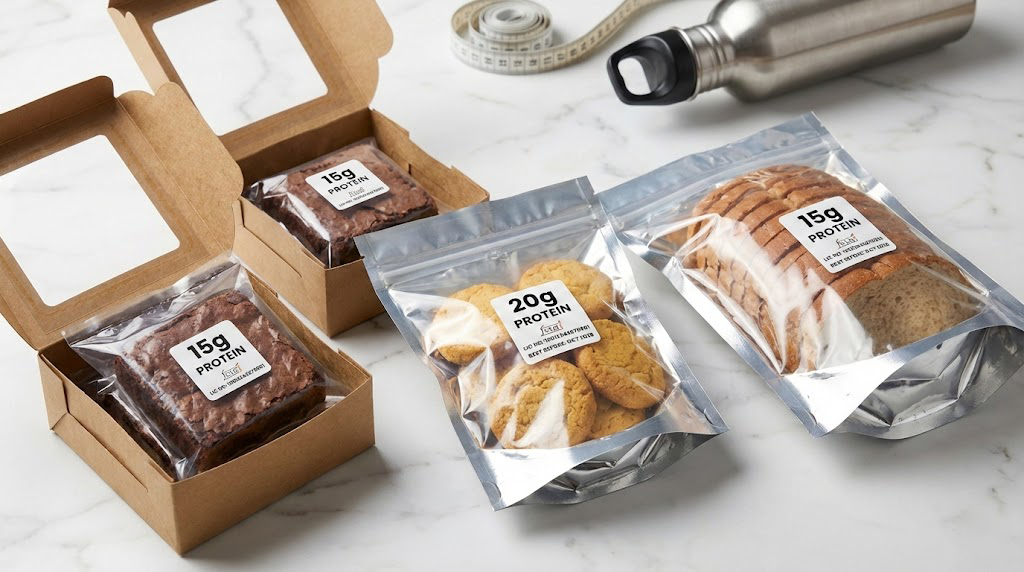
The global protein bakery market is growing at 6 to 8 percent annually, with India specifically showing 9 percent growth as consumers increasingly seek functional foods that combine indulgence with nutrition. High-protein brownies, cookies, and breads now appear in fitness centers, health food stores, and mainstream bakeries across India. But protein-enriched baked goods require different packaging approaches than traditional products due to their unique composition and moisture characteristics.
Whey protein concentrate, casein, and plant-based proteins alter how baked goods interact with air, moisture, and temperature. These ingredients bind water differently than standard flour, creating products that can dry out faster or absorb moisture more readily depending on formulation. Understanding these properties helps you select packaging that maintains product quality from production to consumption.
This guide provides practical, tested information on packaging high-protein baked goods for Indian bakers producing these functional products.
Why Protein Baked Goods Need Different Packaging
Protein content changes the fundamental chemistry of baked goods. Research on protein-enriched products shows they have different water activity levels than standard baked items. Water activity measures how tightly water molecules bind to ingredients. Protein ingredients, particularly whey and casein, have strong water-binding capacity.
Moisture Migration Issues: Standard brownies typically maintain stable moisture for 5 to 7 days in basic packaging. Protein brownies with 12 to 20 grams of whey protein per serving can show moisture changes more quickly when packaged identically. The protein molecules continue binding available moisture after baking, potentially drying the product or making it dense if environmental humidity enters the package.
Oxidation Sensitivity: Oxygen exposure can accelerate flavor deterioration in protein-containing baked goods, especially when fats from nuts or seeds are present. Low headspace and oxygen barrier packaging help maintain product quality. Standard brownie boxes or cookie packaging without oxygen barriers allow too much air contact for protein products.
Texture Retention: Protein bakery customers expect specific textures. A protein cookie should stay soft and chewy or remain crispy depending on style. Protein brownies need to maintain their fudgy or cakey texture. Improper packaging causes protein products to either dry out completely or become soggy, both of which damage the eating experience and lead to customer complaints.
Shelf Life Expectations: Many brands target 7 to 14 days at room temperature with barrier packaging, but actual best-before dates must be set by your own shelf-life testing under Indian temperature and humidity conditions. Products with added natural preservatives may extend further. Compare this to standard cookies that last 4 to 6 weeks. Your packaging must work harder to protect protein products with validated testing.
Essential Packaging Properties for Protein Products
Effective packaging for protein baked goods requires specific technical properties. These are not optional features but necessary characteristics to prevent rapid deterioration.
Moisture Barrier Performance: Your packaging material must prevent moisture exchange between product and environment. Crisp protein cookies need low water activity to retain crunch, while protein brownies typically have higher water activity and require strong moisture and oxygen barriers plus validated shelf-life testing. Packaging with multi-layer construction including polyethylene or polypropylene films provides necessary moisture resistance. Standard kraft paper brownie boxes alone let moisture through. You need either lined boxes or sealed pouches for protein products.
Oxygen Protection: Oxygen exposure degrades protein quality and causes rancidity in products containing nuts or seeds. Packaging should either minimize headspace or use oxygen barrier materials. For individual portions, flow wrap films with barrier properties work effectively. For multiple serving products in boxes, internal sealed pouches protect better than loose stacking.
Seal Integrity: Protein baked goods often contain sticky ingredients like nut butters or honey alternatives. Seal areas must remain clean during packaging or seals fail. Heat-sealed pouches and bags need wide, consistent seals appropriate for your film. Test seal strength daily when starting production and weekly once process is stable. Resealable options using ziplock bags help customers maintain product quality after opening.
Light Protection: While less critical than moisture and oxygen control, light exposure accelerates protein degradation and affects product appearance. Opaque or metallized packaging materials protect better than clear options, though clear windows in window boxes can work if products are consumed within a few days.
Packaging Options by Product Type
Different protein baked goods require specific packaging approaches based on their moisture content, texture, and intended use.
Protein Brownies and Fudgy Products: Protein brownies with 15 to 20 grams protein per serving maintain moisture better than cookies but dry out at cut edges. Individual wrapping works best. Use flow wrap or place each brownie in a sealed pouch before boxing. Standard 4 piece brownie boxes or 6 piece boxes can hold individually wrapped pieces. For maximum shelf life, place wrapped brownies in boxes with cake boards as dividers to prevent crushing.
Protein Cookies: Soft protein cookies need immediate sealing after cooling to lock in moisture. Package in pairs in flow wrap or small pouches. Hard, crispy protein cookies require moisture protection to stay crispy. Stack carefully in cookie boxes with parchment layers between cookies. Include silica gel packets if humidity is concern in your area. Resealable zipper pouches work well for multi-serve cookie packages.
High-Protein Bread and Buns: High-protein breads often have higher protein per slice than standard bread, but values vary widely by recipe. These products tend to dry faster due to protein water binding properties. Slice and package immediately after cooling. Use bread bags with twist ties or heat-sealed ends. For commercial sales, flow wrap individual buns or slice loaves and package in sealed bags. Bread pouches specifically designed for bread work better than generic bags.
Protein Muffins and Cupcakes: Package protein muffins individually if selling singly or in clear containers for sets of 4 to 6. Cupcake boxes with individual cavities prevent products from moving and getting damaged. For grab-and-go sales, dessert tubs with sealed lids keep muffins fresh for 3 to 5 days.
Protein Bars and Bites: Dense protein bars require tight wrapping to prevent drying. Flow wrap individually then package in boxes or pouches for retail. Energy bite products work well in small resealable pouches that customers can carry in bags or gym equipment.
Storage Temperature Considerations
Temperature significantly affects protein baked goods shelf life and your packaging choices must account for storage conditions.
Room Temperature Storage: Protein baked goods stored at 20 to 25 degrees Celsius remain stable for 10 to 14 days in proper packaging. Above 25 degrees, particularly in Indian summer conditions reaching 35 to 40 degrees, proteins denature faster and products dry out quicker. If selling in areas without climate control, inform customers to refrigerate after purchase or consume within 3 to 5 days.
Refrigerated Products: Refrigeration extends shelf life to 3 to 4 weeks for most protein baked goods. However, refrigerators create condensation issues. Package products completely before refrigerating. When products move from cold to warm environments, moisture condenses on packaging exterior and can seep through unsealed boxes. Use fully sealed pouches or bags inside boxes if refrigeration is part of your distribution chain.
Freezing Guidelines: Protein cookies, brownies, and breads freeze well for up to 3 months. Recommend customers keep products in original packaging and place inside ziplock freezer bags. Double packaging prevents freezer burn. Products thaw at room temperature in 30 to 60 minutes or can be heated briefly. Label packages with freezing instructions if offering this as storage option.
Practical Packaging Systems for Indian Bakers
Indian bakers producing protein baked goods need cost-effective packaging that works with local conditions and distribution methods.
Small Batch Home Bakers: If producing 10 to 50 pieces daily, use individual pouches or bags for each item. Source transparent gift bags or fancy ziplock pouches in small quantities. Add your branding with tags and ribbons. This approach keeps investment low while maintaining product quality.
Medium Scale Operations: Producing 100 to 500 pieces daily requires more efficient systems. Invest in basic heat sealing equipment for pouches. Buy brownie boxes, cookie boxes, and pouches in bulk quantities of 100 to 500 units for better pricing. Pre-printed boxes with your brand reduce per-unit costs compared to plain boxes with stickers.
Commercial Bakeries: Large operations benefit from automated flow wrapping equipment. Package individual items in sealed wraps, then pack into branded display boxes for retail shelves. Work with packaging suppliers who understand food safety requirements and can provide certificates for food-grade materials.
Delivery and Shipping Considerations: Protein products shipped via courier need protective outer packaging. Place individually wrapped items in sturdy hamper boxes or goodie boxes with padding. Use shredded paper as cushioning material. Seal outer boxes with strong tape and label clearly.
Labeling Requirements for Protein Products
Protein content claims require specific labeling to comply with FSSAI regulations in India and meet customer expectations.
Mandatory Information: All packaged protein baked goods must display product name, ingredient list with protein sources highlighted, net weight, manufacturing and best before dates, manufacturer details, and FSSAI license number. Protein content claims require nutritional information panel showing protein grams per serving.
Allergen Declarations: Whey and casein proteins are milk derivatives. Clearly state contains milk or dairy on packaging. Soy protein and pea protein also require allergen declarations. Many protein products contain nuts, eggs, or gluten. List all allergens prominently. Consider dedicated allergen-free production if targeting that market.
Storage Instructions: Include storage recommendations on packaging. Store in cool dry place or refrigerate after opening helps customers maintain quality. If products freeze well, mention freeze for up to 3 months. Clear instructions prevent complaints about products drying out or going stale.
Marketing Claims: Under FSSAI Advertising and Claims regulations, protein content claims like source of protein or high in protein are linked to meeting specified percentage RDA thresholds, commonly stated per 100 grams for solid foods and per 100 milliliters or per 100 kilocalories for liquids. Use your tested nutrition values and label according to applicable FSSAI requirements. Protein claims require accurate testing and proper documentation.
Cost Analysis and ROI
Protein product packaging costs more than standard bakery packaging but protects higher-value products.
Packaging Cost Breakdown: Individual flow wrap pouches cost 1.50 to 3 rupees per piece in bulk quantities. Standard brownie boxes run 5 to 12 rupees depending on size and printing. Resealable ziplock pouches cost 3 to 8 rupees. Add labels, ribbons, and tags at 2 to 5 rupees per unit. Total packaging for protein brownie sold at 80 to 120 rupees runs 8 to 18 rupees, representing 10 to 15 percent of retail price.
Quality Impact: Proper packaging reduces product loss from spoilage. Home bakers report 15 to 20 percent loss when using inadequate packaging versus 3 to 5 percent loss with appropriate moisture barriers. For 100 units monthly production, proper packaging prevents loss of 12 to 15 units worth 1000 to 1500 rupees, easily covering the 500 to 800 rupee additional packaging cost.
Customer Perception: Protein bakery customers pay premium prices and expect premium presentation. Professional packaging using quality boxes, sealed pouches, and branded elements justifies higher pricing. The difference between basic and premium packaging costs 5 to 10 rupees per unit but supports 20 to 30 rupee price increases that customers accept.
Common Packaging Mistakes to Avoid
Protein bakery businesses commonly make packaging errors that damage product quality and customer satisfaction.
Using Standard Bakery Packaging: Regular cake boxes or cookie boxes without any inner barriers do not protect protein products adequately. Customers buy protein brownies expecting 7 to 10 day freshness. When products dry out in 2 to 3 days due to inadequate packaging, they leave negative reviews and do not return. Always add sealed pouches or bags inside boxes for protein items.
Packaging While Warm: Sealing protein baked goods before complete cooling creates condensation inside packages. This moisture encourages mold growth and makes products soggy. Cool protein brownies and cookies to room temperature on racks for 45 to 90 minutes before packaging. Protein breads need 2 to 3 hours cooling time.
Overfilling Containers: Cramming too many protein cookies or brownies into boxes damages products and breaks seals. Leave 5 to 10 millimeter space around products in boxes. Use appropriately sized brownie boxes for product counts rather than forcing 6 brownies into 4 piece boxes.
Ignoring Seasonal Factors: Monsoon season in India creates 80 to 95 percent humidity levels in many regions. Standard packaging that works in dry months fails during monsoons. Include desiccant packets during humid months or switch to packaging with better moisture barriers. Similarly, summer heat above 35 degrees requires more robust oxygen barriers.
Insufficient Labeling: Missing storage instructions or unclear best before dates cause customer confusion. Protein products have shorter shelf lives than traditional baked goods. Clearly mark best before dates and explain storage requirements. Add consume within 5 days of opening on resealable packages.
Testing and Quality Control
Establish testing protocols to verify your packaging maintains product quality throughout claimed shelf life.
Shelf Life Testing: Package protein products in your chosen packaging and store at typical temperatures. Check samples every 2 to 3 days for moisture content, texture, aroma, and taste. Document when products no longer meet quality standards. This actual data determines your best before dates. Accelerated testing at higher temperatures predicts longer term stability.
Seal Strength Verification: Periodically test sealed pouches and bags by attempting to pull seals apart. Proper heat seals should not separate with normal handling force. Weak seals indicate equipment problems or packaging material issues. Check seal quality daily when starting production and weekly once process is stable.
Customer Feedback Loop: Track customer complaints about product freshness, packaging damage, or quality issues. Patterns indicate packaging problems. If multiple customers report dry brownies after 3 days, your packaging lacks adequate moisture barrier. Address issues immediately rather than accepting high complaint rates.
Seasonal Adjustments: Test packaging performance during different seasons. Products that stay fresh 10 days in winter might only last 5 days in summer with same packaging. Adjust packaging specifications, add desiccants, or reduce shelf life claims based on seasonal testing results.
Sustainable Packaging Options
Growing environmental awareness drives demand for sustainable packaging even in functional food categories.
Paper-Based Solutions: Kraft paper boxes and paper bags communicate natural and wholesome brand values that align with protein bakery positioning. However, paper alone provides insufficient moisture protection for protein products. Use paper packaging with inner food-grade plastic liners or wax coatings. Customers appreciate recyclable outer packaging even if inner barriers use some plastic.
Compostable Films: Biodegradable films made from plant starches offer sustainable alternatives to conventional plastic pouches. These materials perform adequately for 7 to 14 day shelf life products but cost 50 to 100 percent more than standard films. Consider for premium product lines where sustainability justifies higher packaging costs.
Reusable Containers: For local delivery or farmers market sales, consider reusable tin boxes or plastic containers customers return for deposits. This works for regular customers buying weekly. Clean and sanitize returned containers properly between uses. Metal and hard plastic containers protect protein products well while eliminating single-use packaging waste.
Minimalist Approach: Reduce packaging materials by eliminating unnecessary layers. A protein brownie needs moisture barrier protection and attractive presentation. It does not need box, pouch, ribbon, tag, and sticker all together. Choose packaging combinations that protect product with minimal material use. Simple sealed pouch with printed label works as well as elaborate multi-layer packaging.
Getting Started with Protein Product Packaging
Implementing proper packaging for protein baked goods requires methodical approach rather than random purchasing.
Assess Your Products: Evaluate moisture content, protein levels, and target shelf life for each product. Protein brownies with 18 grams protein need different packaging than protein cookies with 8 grams protein. Higher protein content requires better barriers.
Start Small: Order small quantities of different packaging options from suppliers like Bakeyy. Test brownie boxes, pouches, and sealed bags with actual products before committing to large purchases. Track which packaging maintains quality longest.
Document Everything: Keep records of packaging materials tested, shelf life achieved, costs, and customer feedback. This data guides future purchasing decisions and helps troubleshoot quality issues. Photograph products at different time intervals to visually document packaging performance.
Scale Gradually: Once you identify packaging that works, order in increasing quantities to reduce per-unit costs. Buying 100 units costs more per piece than 500 units. Plan inventory to balance cash flow with volume discounts. Work with suppliers who offer flexible minimum orders as production grows.
Maintain Consistency: Once established with packaging that works, stick with it. Constantly changing packaging confuses customers and makes quality control difficult. If you must change suppliers, test new packaging thoroughly before switching completely. Order both old and new packaging temporarily to verify consistency.
Final Recommendations
Protein baked goods represent growing market opportunity in India as fitness and nutrition awareness increases. Proper packaging protects your investment in premium ingredients and positions products appropriately in the market.
The basic requirements are clear. Protein products need moisture barriers, oxygen protection, and complete sealing that traditional bakery packaging does not provide. Individual wrapping before boxing, sealed pouches, or specialized containers maintain quality throughout realistic shelf life periods.
Start with tested packaging solutions from reliable suppliers. Use brownie boxes with sealed inner pouches for protein brownies. Package protein cookies in resealable bags that maintain texture. Protect protein breads in sealed bread pouches that prevent moisture loss.
Test your packaging under actual storage and distribution conditions. Document shelf life performance and adjust packaging specifications based on results rather than assumptions. Customer feedback provides valuable quality control data.
Consider packaging costs as percentage of retail price rather than absolute rupee amounts. Protein products command premium pricing that supports investment in proper packaging. The 10 to 15 percent packaging cost protects product quality that justifies premium prices.
Focus on packaging that actually protects products rather than packaging that merely looks attractive. Beautiful boxes with inadequate moisture barriers fail regardless of visual appeal. Conversely, effective sealed pouches in simple kraft boxes maintain quality while communicating natural brand values. Function and appearance both matter, but protection comes first for protein baked goods.