

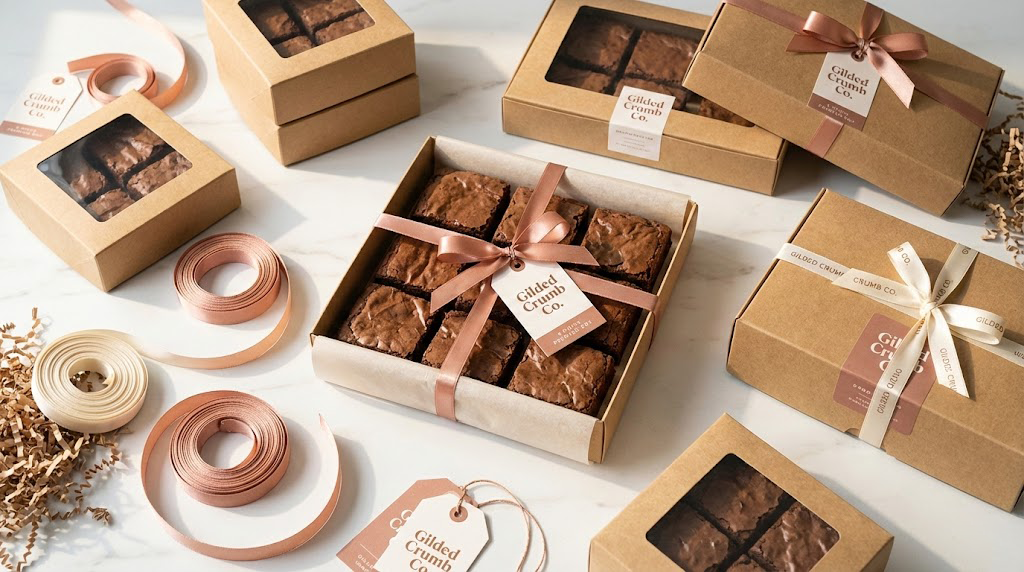
Brownies are one of the most popular baked goods in India, but they are also one of the trickiest to package properly. Too small a box and your brownies get squashed. Too large and they slide around during delivery, arriving at your customer looking messy and unprofessional. The wrong material and the oil seeps through, staining the box and making it look cheap.
Whether you are a home baker selling a dozen brownies a week or a commercial bakery fulfilling hundreds of orders daily, choosing the right brownie packaging directly impacts your costs, your brand image, and customer satisfaction. This comprehensive guide will walk you through everything you need to know about brownie packaging, from standard sizes to material choices, pricing considerations, and professional presentation techniques.
By the end of this guide, you will know exactly which brownie box sizes to stock, how to calculate your packaging costs per unit, and how to make your brownies stand out in a crowded market.
Understanding Standard Brownie Sizes in India
Before you can choose the right packaging, you need to understand the standard brownie portions that customers expect in the Indian market. Unlike cakes where sizes are measured in pounds or inches, brownies are typically sold by count or weight.
Individual Brownies: Single serving brownies are usually cut to 2 inch by 2 inch squares or 2.5 inch by 2.5 inch for premium versions. Weight ranges from 60 grams to 100 grams depending on thickness and how fudgy your recipe is. These need small individual brownie boxes or can be packaged in dessert tubs for a modern look.
4 Piece Boxes: The most common size for gifting or small orders. Four 2 inch brownies fit comfortably in a compact box. This is perfect for personal gifts, small corporate orders, or customers buying for immediate consumption. Total weight is around 250 to 300 grams.
6 Piece Boxes: Popular for family consumption or small parties. Six brownies at standard size give you roughly 400 to 450 grams. This size works well for birthday return gifts or festival gifting. The box dimensions need to accommodate either a 2 by 3 or 3 by 2 arrangement.
9 Piece Boxes: This is the sweet spot for serious brownie lovers. Nine pieces arranged in a 3 by 3 grid looks visually appealing and provides enough quantity for a small gathering. Weight is typically 500 to 600 grams. These are premium purchases and your packaging should reflect that quality.
12 Piece and Larger: Used for parties, corporate gifting, or bulk sales. Twelve piece boxes can be arranged as 3 by 4 or 4 by 3. For very large orders of 16 or 24 pieces, you might use cake boxes or custom sized containers. Weight goes up to 1 kg or more.
Choosing the Right Box Dimensions
Box dimensions are not just about fitting your brownies inside. You need to account for thickness, whether you are using dividers, if you want space for tissue paper or shredded paper, and how the box will stack during storage and transport.
Length and Width Calculations: Start with your brownie dimensions and add clearance. If you are packing four 2 inch brownies in a 2 by 2 arrangement, you need at least a 4.5 inch by 4.5 inch interior to allow for easy placement and removal. Add another quarter inch if you are using dividers or liners. Most standard brownie boxes come in 5 inch, 6 inch, 7 inch, and 8 inch sizes to accommodate different configurations.
Height Considerations: This is where many bakers make mistakes. A standard brownie is about 1 inch to 1.5 inches thick. But if you stack them or add toppings like ganache, nuts, or frosting, you need extra height. A 2 inch tall box works for single layer standard brownies. Go for 2.5 to 3 inches if you are doing thick fudge brownies or layered varieties. Boxes that are too short will compress your brownies or prevent the lid from closing properly.
Window Boxes vs Solid Boxes: Window boxes have a transparent panel that lets customers see the brownies inside. This works great for display and retail sales because people buy with their eyes. However, window boxes are slightly more expensive and the plastic window can fog up in humid conditions. Solid boxes are more economical and better for delivery orders where presentation happens when the customer opens the box at home. Many bakers use window brownie boxes for premium varieties and solid boxes for regular orders.
Pro Tip: Always test your packaging with actual brownies before ordering in bulk. Put your brownie in the box, close it, shake it gently, and see what happens. Does it move around? Does the lid bow outward? Is there oil staining after a few hours? Real world testing saves you from costly packaging mistakes.
Material Matters: Cardboard, Kraft, or Specialty Options
The material you choose for your brownie packaging affects cost, durability, food safety, and your brand image. Different materials work better for different types of brownies and business models.
Standard Cardboard Boxes: These are your workhorse packaging. Made from food grade cardboard with a smooth finish, they are affordable, sturdy enough for most brownies, and available in both white and kraft brown. Standard cardboard works well for regular brownies that are not overly oily. The smooth surface is great for sticker branding or custom printing. Most brownie boxes in this category come in 250 GSM to 350 GSM thickness.
Grease Resistant Boxes: If you are making fudgy brownies with lots of butter or oil, you need boxes with a grease resistant coating or lining. Without this, the oil seeps through the cardboard within hours, leaving ugly stains and making the box weak. Grease resistant boxes cost about 20 to 30 percent more but are essential for premium brownies. Look for boxes with a poly coating or wax lining on the interior.
Kraft Paper Boxes: The natural brown kraft look is popular for artisanal and organic branding. Kraft boxes signal eco-friendliness and homemade quality. They work great for brownies marketed as natural, organic, or handcrafted. However, plain kraft shows grease stains even more than white cardboard, so you definitely need grease resistant versions. Kraft boxes pair beautifully with jute ribbons and kraft tags for a complete rustic aesthetic.
Plastic Containers: Clear plastic dessert tubs or PET boxes work excellently for brownies with elaborate toppings or when you want full product visibility. They are completely grease proof, stack well in refrigerators, and protect brownies during transport better than cardboard. The downside is they are more expensive and less eco-friendly. Many bakeries use plastic containers for premium brownies with ganache, caramel drizzle, or complex decorations.
Tin Boxes for Premium Gifting: If you are targeting the premium gift market, consider reusable tin boxes. They cost significantly more but create a luxury unboxing experience. Customers keep and reuse the tins, giving you ongoing brand visibility. Tin boxes work best for special occasions like Diwali, weddings, or corporate gifting where the packaging itself is part of the gift.
Calculating Your Packaging Cost Per Brownie
Understanding your true packaging cost per unit helps you price your brownies correctly and maintain healthy margins. Many new bakers underestimate packaging costs and end up squeezing their profits.
Base Box Cost: A standard 4 piece brownie box typically costs between 8 to 15 rupees depending on material, whether it has a window, and your order quantity. Larger boxes for 6 or 9 pieces range from 12 to 25 rupees. Premium options like grease resistant coating or custom printing add 3 to 10 rupees per box. When you buy in bulk from suppliers like Bakeyy, you get better per unit pricing.
Additional Packaging Elements: Do not forget to budget for the complete packaging system. Cake boards or cardboard bases add 2 to 5 rupees. Parchment paper or tissue paper for lining costs about 1 to 2 rupees per box. Ribbons add 2 to 8 rupees depending on quality. Sticker labels or tags cost 1 to 3 rupees each.
Total Cost Example: Let us calculate the total packaging cost for a 4 piece premium brownie box. Standard window box 12 rupees, small cardboard base 3 rupees, parchment paper lining 1 rupee, satin ribbon 5 rupees, branded sticker 2 rupees. Total packaging cost is 23 rupees. If your ingredient cost for 4 brownies is 40 rupees and you want a 60 percent margin, you need to price this at minimum 105 rupees before considering labor, overhead, and delivery.
Volume Discounts: Packaging costs drop significantly with volume. Buying 100 boxes might cost you 15 rupees each, but buying 1000 boxes could bring that down to 10 rupees. Track your monthly usage and buy in larger quantities when you have predictable demand. However, avoid over-ordering sizes you rarely use. It is better to stock up on your top 2 or 3 box sizes than to have 10 different sizes sitting around.
Presentation Techniques That Sell
The same brownies in different packaging can sell for wildly different prices. Professional presentation justifies premium pricing and creates Instagram worthy moments that drive organic marketing.
Liner Papers and Separators: Always use parchment paper or food safe tissue paper between your brownies and the box. This prevents direct contact with cardboard, absorbs any excess oil, and makes removal easier for customers. For multi-piece boxes, use cardboard dividers to prevent brownies from touching and smudging each other. The dividers also stop movement during transport. You can get pre-cut dividers or make them yourself from cake boards.
The Power of Ribbons: A simple satin ribbon instantly elevates your packaging from basic to premium. Wrap the ribbon around the box and tie a bow on top. This small touch adds 5 rupees to your cost but can justify 30 to 50 rupees more in selling price. Color coordinate your ribbons with your brand. Rose gold or copper ribbons work beautifully with kraft boxes. White satin ribbons look elegant on white boxes. During festivals, switch to festive colors like red and green for Christmas or gold for Diwali.
Branded Stickers and Tags: Even if you cannot afford custom printed boxes yet, branded stickers on plain boxes create a professional look. Get circular or rectangular stickers printed with your logo and bakery name. Minimum orders start from just 100 pieces. Hang tags attached with twine or ribbon add another premium touch. You can include your social media handles, ingredients list, or a personal thank you message on the tags.
Outer Packaging for Delivery: Your brownie box is not the final packaging layer for delivery orders. Use courier covers or sturdy cake bags to protect the decorative box during transit. Add bubble wrap or shredded paper cushioning if needed. The unboxing experience starts with the courier package, not just the brownie box inside.
Seasonal Touches: Adapt your packaging presentation for festivals and special occasions. Valentine's Day gets red ribbons and heart shaped stickers. Diwali gets gold accents and maybe a small diya. Christmas gets festive ribbons and themed tags. These small adaptations make your brownies feel special and gift worthy.
Solving Common Brownie Packaging Problems
Even experienced bakers run into packaging challenges. Here are solutions to the most common problems.
Problem: Oil Stains Appearing on Boxes: This happens when your brownies are too oily or your boxes lack grease resistance. Solutions include switching to grease resistant boxes, adding an extra layer of parchment paper between brownies and box, or letting brownies cool completely and even chill before packaging to solidify surface oils. Fudgy brownies will always have some oil migration, so grease resistant packaging is not optional for these varieties.
Problem: Brownies Sticking to Each Other: Warm brownies stick together terribly. Always cool brownies completely before cutting and packaging. Use parchment paper squares between individual pieces. For ganache topped or frosted brownies, chill them in the refrigerator for 30 minutes before packaging so the topping sets. Consider using individual cupcake liners as separators for a decorative touch.
Problem: Box Lid Will Not Close Properly: Your brownies are too thick for the box height, or you have stacked them incorrectly. Measure your brownie thickness accurately before ordering boxes. If you cut extra thick brownies, you need 2.5 to 3 inch tall boxes. Do not force the lid closed as this compresses and ruins the brownies. It is better to use a slightly larger box with extra parchment padding than to squash your products.
Problem: Brownies Arriving Damaged During Delivery: This is a combination of packaging and courier handling. Use double boxing for fragile orders. Place your decorative brownie box inside a larger corrugated carton with cushioning material. Mark packages as fragile. Choose reliable courier partners who understand food deliveries. Some bakeries include a cardboard base under the brownie box and another on top before sealing the outer package for extra crush protection.
Problem: Packaging Costs Eating Into Profits: Review your packaging strategy honestly. Are you over-packaging? A home baker does not need the same presentation as a luxury bakery. Start with good quality plain boxes and simple branding. As you grow and can buy in larger quantities, your per unit costs will drop. Consider offering two packaging tiers. Standard packaging for regular orders and premium gift packaging for special occasions at a higher price point.
Building Your Packaging Inventory Smartly
Having the right packaging on hand when you need it is crucial. But you do not want thousands of rupees tied up in inventory that sits unused.
Start with Your Best Sellers: Track which brownie sizes sell most frequently. If 70 percent of your orders are 4 piece boxes, stock heavily on those. Keep smaller quantities of 6 piece and 9 piece boxes. This prevents dead inventory while ensuring you can fulfill most orders immediately.
Maintain a Reorder Buffer: Never let your packaging stock run completely out. When you hit 25 percent remaining, place your reorder. Most suppliers like Bakeyy ship within 2 to 3 days for stock items, but you need buffer for unexpected delays or demand spikes.
Stock Up Before Peak Seasons: Festival seasons like Diwali, Christmas, and Valentine's Day see huge demand spikes. Order your packaging 4 to 6 weeks before these periods. Suppliers get overwhelmed with orders during peak season and lead times stretch. Having your packaging ready lets you focus on production instead of scrambling for supplies.
Coordinate Purchases Across Categories: If you are buying brownie boxes, add ribbons, stickers, and parchment paper to the same order. This saves on shipping costs and ensures you have complete packaging systems ready.
Storage Matters: Keep packaging in a cool, dry place away from moisture and direct sunlight. Cardboard boxes absorb humidity which makes them weak and prone to collapsing. Stack boxes carefully to prevent crushing. Keep different sizes organized so you can find what you need quickly during busy production hours.
Alternative Packaging Ideas for Different Markets
While standard boxes work for most scenarios, thinking creatively about packaging can help you target specific markets or occasions.
Jar Packaging for Brownie Bites: Small brownie bites packaged in clear glass jars or plastic jars create a unique product. Layer brownie chunks with cream cheese frosting or whipped cream for brownie parfaits. This works great for cafes, dessert shops, or targeting health conscious customers who want portion control.
Gift Hampers and Combo Boxes: Combine brownies with cookies, chocolates, or other treats in hamper boxes. Add shredded paper as filler and wrap with decorative net. These premium hampers command much higher prices and work excellently for corporate gifting.
Eco Friendly Options: The market for sustainable packaging is growing. Offer brownies in plain kraft boxes with minimal plastic, use jute bags instead of plastic bags, and skip ribbons for simple twine. Position this as your eco-conscious line and charge a small premium. Many corporate clients specifically request sustainable packaging.
Subscription Box Packaging: If you run a brownie subscription service, invest in branded reusable packaging. Customers receive their monthly brownies in a box they keep and use for storage. This builds brand loyalty and reduces your packaging costs over time. Include recipe cards, discount coupons for next month, or small surprise additions.
Testing and Quality Control
Before committing to thousands of boxes, run proper tests. This saves you from expensive mistakes.
The 24 Hour Test: Package your brownies exactly as you would for a customer. Leave them at room temperature for 24 hours. Check for oil stains, check if brownies have dried out or if they look as fresh as when packed. Open the box and see if brownies are easy to remove without breaking. This test reveals issues that are not apparent immediately after packaging.
The Transport Test: Put your packaged brownies in a bag and drive around for 30 minutes on rough roads or shake the package vigorously. Open and check for damage. If brownies have shifted and smudged the box interior, you need better securing. Add dividers, use a smaller box, or add more cushioning material.
The Refrigeration Test: If customers might refrigerate your brownies, test this. Cardboard can absorb moisture and become weak in the fridge. Some boxes develop condensation on window panels. Package brownies and refrigerate for 12 hours, then check the box condition.
Customer Feedback Loop: After you launch with new packaging, actively ask customers for feedback. Were the brownies easy to remove? Did the box look premium? Was anything damaged? This real world feedback is more valuable than any testing you can do.
Making Your Final Decision
Choosing the right brownie packaging is a balance between cost, functionality, and brand image. There is no single perfect solution that works for everyone. A home baker selling to friends and family has different needs than a commercial bakery supplying cafes.
Start with quality basics. Invest in good brownie boxes that fit your product properly and protect them during delivery. Add simple branding through stickers and ribbons. As your business grows and you can order in larger quantities, upgrade to custom printed boxes or premium materials.
Remember that packaging is not just protection. It is marketing, it is customer experience, and it is what people see when they receive your brownies as a gift. Good packaging can justify premium pricing. Poor packaging makes even the best brownies look cheap.
Track your packaging costs carefully as part of your overall cost of goods. Factor in not just the box but all elements including liners, ribbons, labels, and outer packaging for delivery. Calculate your true cost per brownie and price accordingly.
Test different options before committing to large orders. Order samples from multiple suppliers. Try different sizes and materials with your actual brownies. Get feedback from friends, family, and early customers. What looks good in photos might not work in practice.
Build relationships with reliable suppliers who understand the bakery business. Quality suppliers like Bakeyy offer not just brownie boxes but complete packaging solutions including bags, decorative supplies, and even baking ingredients. Having one trusted source simplifies ordering and often gets you better pricing.
Stay adaptable. What works for your business today might need adjustment as you grow. Maybe you start with simple kraft boxes and later upgrade to custom printed versions. Maybe you launch with standard sizes and later add specialty packaging for premium varieties. Your packaging strategy should evolve with your business.
The right packaging turns customers into repeat buyers and creates brand advocates who share photos of your beautiful brownies on social media. It is worth investing time and thought into getting it right. Use this guide as your starting point, test options thoroughly, and build a packaging system that supports your business growth while staying within budget.
Your brownies deserve packaging that shows them off beautifully, protects them perfectly, and makes customers excited to buy from you again.