

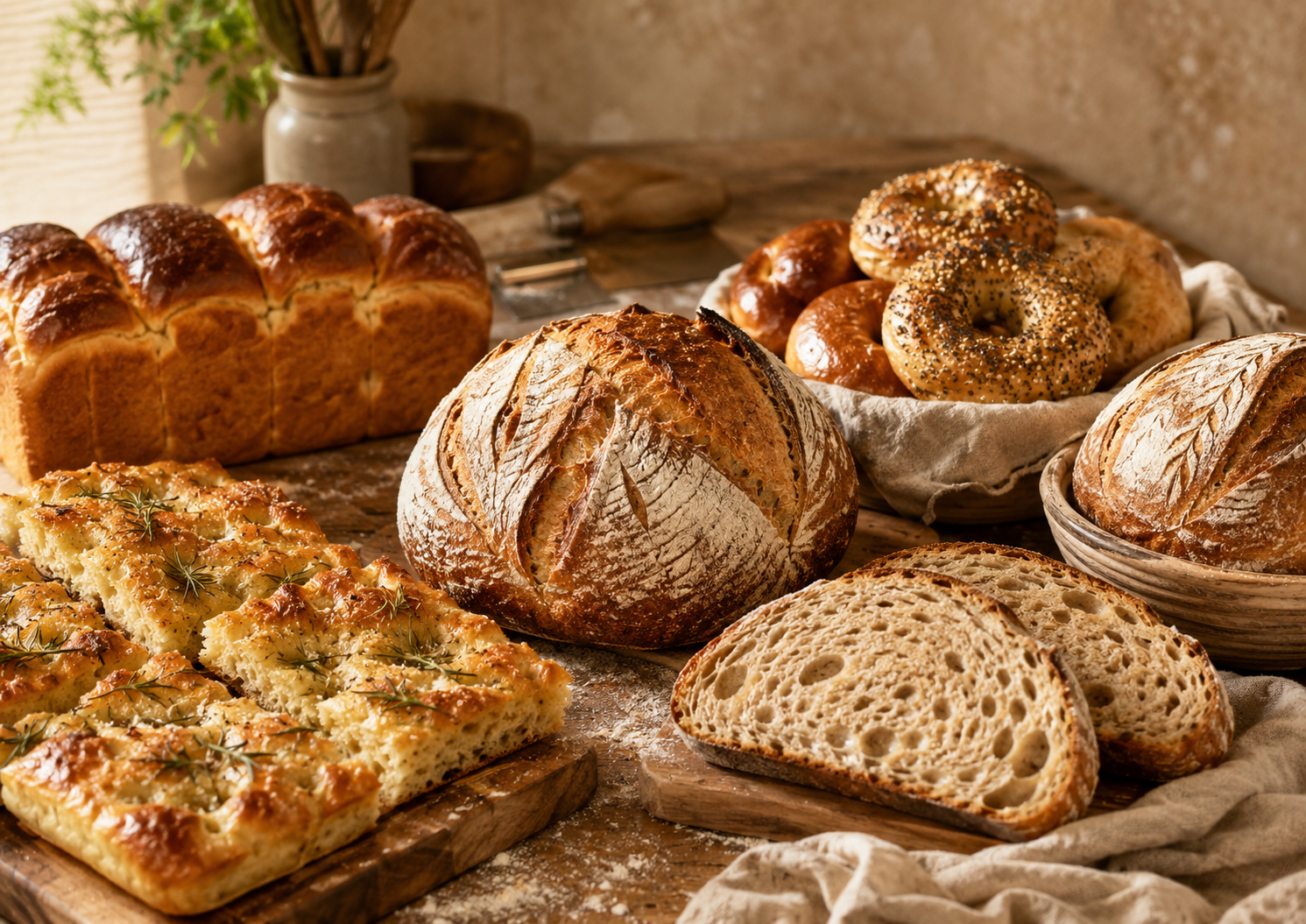
Artisan bread is moving from a niche café product to a serious opportunity for Indian home bakers, cloud kitchens and small bakeries. Customers who once bought only sandwich bread, pav or buns are increasingly discovering sourdough, focaccia, brioche, bagels, seeded loaves and slow-fermented breads.
This shift is especially visible in cities such as Bengaluru, Mumbai, Delhi NCR, Pune, Hyderabad, Chennai, Kolkata, Ahmedabad and Goa, where customers are more exposed to global café menus, ingredient-led products and premium handcrafted food. Recent Indian food coverage has also highlighted growing consumer interest in sourdough, focaccia, brioche, bagels and heritage-grain breads.
However, selling artisan bread successfully requires more than learning one sourdough recipe. Bread is a production business. Fermentation has to be scheduled, dough temperature must be controlled, finished loaves must cool before packing, packaging must match the crust and crumb, and prices must include labour, electricity, wastage and delivery.
This guide explains how to build an artisan bread business in Indian conditions. It covers product selection, production planning, sourdough starter management, focaccia, brioche, bagels, pricing, packaging, shelf life, monsoon humidity, delivery, labelling, photography and customer retention.
Important: this guide provides business and food-handling information, not a universal commercial formula. Recipes, fermentation periods, shelf life, packaging and food-safety decisions should be tested under your actual production conditions. Check the latest FSSAI requirements applicable to your business before selling packaged bread.
Why Artisan Bread Has Business Potential in India
Traditional bakery bread competes mainly on price, convenience and everyday familiarity. Artisan bread competes on flavour, fermentation, texture, ingredients, craftsmanship and experience.
A customer may compare two standard sandwich loaves mainly by price. A customer buying sourdough may instead compare crust, crumb, flour, fermentation time, inclusions, freshness and how the bread fits into their meals. This gives a small bakery more room to build a differentiated brand.
Artisan bread also creates repeat-purchase potential. Cakes are often occasion-based, but bread can become a weekly product. A customer who enjoys one loaf may reorder every Friday, subscribe to a weekly bread box or add focaccia and bagels to a regular order.
The opportunity is not limited to classic European products. Indian artisan bread businesses can develop menus around local eating habits, including chilli-cheese focaccia, garlic-coriander sourdough, masala bagels, paneer focaccia sandwiches, cardamom brioche, millet loaves and curry-leaf bread.
What Is Artisan Bread?
Artisan bread generally refers to bread made with greater attention to fermentation, shaping, texture and ingredient quality than mass-produced industrial bread. It is often made in smaller batches and may use sourdough starter, long fermentation, hand shaping, higher hydration or distinctive grains and inclusions.
The word “artisan” should not be used merely because the loaf looks rustic. A genuine artisan-bread business should be able to explain its process clearly: the flour used, fermentation method, production schedule, loaf weight, inclusions and recommended storage.
Artisan bread does not have to be sourdough. Focaccia made with commercial yeast can still be an artisan product when it is carefully fermented, shaped, topped and baked in small batches. Brioche, bagels, baguettes and Japanese-style milk bread can also form part of an artisan menu.
Quick Comparison: Which Artisan Bread Should You Sell?
| Bread type | Production difficulty | Typical preparation cycle | Delivery difficulty | Business advantage |
|---|---|---|---|---|
| Sourdough boule or batard | High | Often 18–36 hours including fermentation | Medium | Premium positioning and strong repeat potential |
| Focaccia | Beginner to intermediate | Same day or overnight | Medium to high because of oil and toppings | Easy flavour innovation and visual marketing |
| Brioche | Intermediate | Overnight is often practical | Low to medium | Soft, rich and familiar to customers who dislike crusty bread |
| Bagels | Intermediate | Same day or overnight | Low when sold plain | Portion-controlled and suitable for breakfast subscriptions |
| Soft sandwich loaf | Beginner to intermediate | Same day | Low | Broad audience and weekly household demand |
| Seeded or millet loaf | Intermediate | Same day or overnight | Low to medium | Ingredient-led positioning and local differentiation |
Best Artisan Bread Menu for a New Home Bakery
A new bread business should not launch with fifteen types of bread. Each additional dough creates more inventory, fermentation schedules, packaging sizes and chances of waste.
A practical starter menu is:
One signature sourdough: plain country loaf or whole-wheat sourdough.
One approachable focaccia: rosemary and sea salt, garlic herb or chilli cheese.
One soft bread: brioche loaf, milk bread or soft sandwich loaf.
One portioned product: plain, sesame or everything-style bagels.
One rotating weekly flavour: olive jalapeño sourdough, pesto focaccia, cardamom brioche or multigrain loaf.
This structure gives customers variety while allowing the bakery to reuse flour, yeast, salt, oil, seeds and packaging across products.
How to Make Sourdough for a Bread Business
Sourdough is bread fermented with a culture of flour and water containing naturally occurring yeasts and lactic-acid bacteria. A healthy starter can leaven dough and contribute acidity, aroma and flavour.
For business use, the goal is not simply to keep a starter alive. The starter must perform consistently according to a production schedule.
Control the Starter Ratio
Use a defined feeding ratio rather than feeding randomly. For example, a baker may feed one part starter with two parts water and two parts flour by weight. The correct ratio depends on the required ripening time and room temperature.
A Bengaluru kitchen at 24°C will produce a different fermentation speed from the same kitchen at 30°C. During summer or monsoon, you may need a lower inoculation, cooler water, a larger feed or refrigeration to prevent the starter from peaking too early.
Track Starter Performance
Record the feeding time, flour, water temperature, room temperature, peak time, aroma and rise. A starter that doubles in four hours one week and eight hours the next will make production planning unreliable.
Maintain a Backup
Keep a small refrigerated backup starter separate from the daily production starter. Some bakeries also dry a small amount of active starter as emergency insurance.
Standardise Dough Temperature
Fermentation depends heavily on temperature. Measure flour temperature, room temperature and water temperature. The same recipe can over-ferment in Hyderabad in May and under-ferment in a cool air-conditioned kitchen.
Using chilled water in hot weather or warmer water in cool weather helps maintain a more consistent final dough temperature.
Do Not Sell Health Claims You Cannot Support
Sourdough fermentation can affect flavour, acidity, texture and dough behaviour, but a bakery should avoid broad claims such as “safe for diabetics,” “gluten-free” or “cures digestion” unless the product and claim meet applicable legal and scientific requirements.
Normal wheat sourdough still contains gluten. Customers with coeliac disease should not be told that ordinary sourdough is gluten-free.
Basic Commercial Sourdough Workflow
| Stage | What happens | Control point |
|---|---|---|
| Levain preparation | Production culture is built from the starter | Use near its intended maturity, not automatically at a fixed clock time |
| Mixing | Flour, water, levain and salt form the dough | Record final dough temperature |
| Bulk fermentation | Dough gains gas, strength and flavour | Judge rise, strength and aeration rather than using time alone |
| Dividing and pre-shaping | Dough is portioned and organised | Use a scale for consistent sale weight |
| Final shaping | Surface tension and loaf structure are created | Avoid tearing and excessive degassing |
| Cold proofing | Shaped loaves ferment under refrigeration | Refrigerator temperature and proof length must be consistent |
| Scoring and baking | Steam, heat and scoring control expansion and crust | Track oven loading, bake time and final colour |
| Cooling | Internal moisture redistributes and crumb sets | Do not slice or seal while hot |
How to Make Focaccia for Sale
Focaccia is one of the strongest entry products for an artisan bread business because it is highly visual, flavour-friendly and easier for many customers to understand than sourdough.
A focaccia can be sold as a full tray, half tray, sandwich slab, individual square or party platter. This creates several price points from one dough.
Control Oil Without Creating Greasy Packaging
Olive oil contributes flavour and crust texture, but excessive surface oil can soak through thin paper, weaken boxes and create an untidy customer experience. Use a grease-resistant liner and a rigid container that supports the bread.
Choose Toppings for Delivery
Rosemary, garlic, olives, onions, chilli, cheese and herbs can work well. Very wet tomatoes, fresh cheese, sauces and heavy vegetable toppings increase moisture and may reduce the practical shelf life.
Test each topping after two hours in the final package. A focaccia that looks excellent when it leaves the oven may become soggy after a delivery journey.
Sell by Weight or Standard Size
A customer should know whether they are buying an individual portion, a 6-inch focaccia, a half tray or a full tray. Standardise the dough weight and topping quantity for every size.
Use Focaccia as a Menu Platform
Potential India-friendly flavours include:
Garlic, coriander and chilli focaccia; paneer tikka focaccia; caramelised onion and cheese focaccia; pesto and roasted pepper focaccia; curry-leaf and sesame focaccia; chilli-oil focaccia; olive and jalapeño focaccia; and masala potato focaccia.
Do not add flavours merely because they are unusual. Every topping should survive baking, packing and delivery while complementing the bread.
How to Make Brioche for Sale
Brioche is an enriched bread containing ingredients such as butter, eggs, milk and sugar. It is softer and richer than lean sourdough bread, making it familiar to customers who prefer buns, sweet bread and soft breakfast products.
Brioche can be sold as loaves, burger buns, rolls, knots, babka-style swirls or mini gifting breads.
Temperature Is Critical
Butter can melt into the dough when the mixture becomes too warm. In Indian kitchens, use cooler ingredients, rest the dough when necessary and avoid overheating during mixing.
Include Ingredient Cost Honestly
Butter, eggs, milk, chocolate and fillings can make brioche significantly more expensive than lean bread. Do not price it by comparing only its weight with a normal loaf.
Protect Softness
Brioche benefits from packaging that slows moisture loss. Unlike crusty sourdough, it is usually suitable for a closer or sealed package after complete cooling.
Create Premium Variants
Cardamom brioche, cinnamon brioche, chocolate brioche, orange brioche, savoury cheese brioche and mini brioche buns can create premium menu options. Filled versions may require shorter shelf-life guidance depending on the filling.
How to Make Bagels for Sale
Bagels are shaped yeast breads traditionally boiled before baking. This process contributes to their characteristic chewy crust and dense crumb.
Bagels work well for a home-bakery business because they are portion-controlled, freezer-friendly and suitable for breakfast subscriptions.
Standardise the Ring Size
Small differences in rope length and thickness can create large differences in appearance. Weigh each dough piece and use a fixed shaping method.
Control the Boil
Boiling time affects the crust and expansion. The exact water treatment varies by recipe, but every batch should follow the same process.
Sell Plain and Flavoured Options
Useful flavours include sesame, poppy seed, mixed seed, garlic, onion, cheese, chilli cheese and everything-style seasoning.
Keep Sandwich Fillings Separate From Bread Shelf Life
A plain bagel and a cream-cheese bagel sandwich are different products. A filled sandwich containing dairy, vegetables, eggs or meat requires refrigerated handling and a much shorter consumption window.
Essential Equipment for a Small Artisan Bread Business
You do not need an industrial bakery on day one, but certain tools improve consistency.
| Equipment | Why it matters | Beginner priority |
|---|---|---|
| Digital weighing scale | Controls ingredients and loaf weight | Essential |
| Oven thermometer | Checks whether the displayed oven temperature is accurate | Essential |
| Probe thermometer | Measures dough, water and finished bread temperature | Highly useful |
| Dough scraper | Divides, lifts and handles dough cleanly | Essential |
| Cooling rack | Allows air circulation and prevents a damp base | Essential |
| Loaf tins and baking trays | Standardise shape and size | Essential for pan loaves and focaccia |
| Proofing baskets | Support shaped sourdough | Useful after initial testing |
| Mixer | Improves volume capacity, especially for brioche | Upgrade when orders justify it |

Explore Bakeyy’s metal bakeware collection, baking moulds and baking tools when planning a small bread-production setup.
Should You Use Reusable Tins or Bake-and-Serve Moulds?
Reusable metal tins are usually more economical for daily production. They create consistent shapes and can be used repeatedly when maintained correctly.
Bake-and-serve paper moulds combine baking and presentation. They are useful for gifting breads, mini brioche, tea loaves and seasonal bread products because the bread does not need to be removed from the mould before packing.
However, the mould becomes part of the product cost and must be included in pricing.


How to Calculate the Cost of Artisan Bread
Many home bakers calculate only flour, yeast and butter. This creates an artificially low cost and leads to underpricing.
Use this complete formula:
Total batch cost = ingredient cost + packaging cost + direct labour + electricity or gas + delivery preparation + wastage allowance + operating overhead.
Cost per saleable unit = total batch cost ÷ number of saleable units.
Required selling price = cost per unit ÷ target food-cost percentage.
For example, if one loaf costs ₹150 to produce and the bakery wants the cost to represent 50% of the selling price:
₹150 ÷ 0.50 = ₹300 selling price.
If the target cost percentage is 40%:
₹150 ÷ 0.40 = ₹375 selling price.
This is not a universal margin recommendation. Your target must reflect your market, taxes, delivery model, product positioning and operating expenses.
Sample Sourdough Costing Model
The figures below are an example for teaching the method. Replace every amount with your actual purchase rate.
| Cost component | Example batch cost |
|---|---|
| Flour and starter flour | ₹180 |
| Salt and minor ingredients | ₹20 |
| Seeds or inclusions | ₹80 |
| Electricity or gas | ₹100 |
| Packaging and labels | ₹120 |
| Direct labour | ₹300 |
| Wastage and overhead allocation | ₹100 |
| Total for six loaves | ₹900 |
| Cost per loaf | ₹150 |
If the six-loaf batch produces only five saleable loaves because one is damaged, the true cost becomes ₹180 per saleable loaf. This is why wastage must be measured instead of ignored.
Visual Cost Chart: Where Artisan Bread Money Goes
This chart illustrates a possible cost structure for a small batch. Your actual percentages will differ.
Labour: 33%
Ingredients: 31%
Packaging: 13%
Energy: 11%
Wastage and overhead: 12%
The chart shows why pricing bread only from flour cost is misleading. Labour, oven usage and packaging can collectively exceed the cost of flour.
How Much Should Artisan Bread Cost in India?
There is no correct nationwide price for sourdough, focaccia, brioche or bagels. A loaf sold from a home kitchen in a small city has a different cost structure from a premium café product in Mumbai or Bengaluru.
Price should reflect:
Final bread weight; flour and inclusion quality; fermentation time; labour; batch size; packaging; delivery; wastage; taxes; local purchasing power; competitor positioning; and whether the product is everyday bread or premium gifting bread.
Recent Indian reporting has noted urban customers paying ₹200 or more for artisanal sourdough and heritage-grain loaves. That market observation does not mean every loaf should be priced at ₹200. Your price must come from your own cost and positioning.
How to Prevent Underpricing
Do not price based only on the nearest bakery. The other bakery may buy flour in bulk, own a larger oven or exclude labour from its calculation.
Do not treat starter as free. The flour used to maintain the starter, discarded starter, refrigeration and labour are business costs.
Do not ignore failed loaves. Over-proofed dough, burnt bread, damaged toppings and customer replacements affect profitability.
Do not offer free delivery without including it somewhere in the business model. Delivery can destroy the margin on a single loaf.
Do not sell a heavily topped focaccia at the same margin as a plain loaf merely because the dough weights are similar.
Best Packaging for Sourdough Bread
Packaging must balance crust protection, moisture loss, hygiene, branding and delivery.
Fresh crusty sourdough releases moisture after baking. Sealing it too early in plastic traps moisture and softens the crust. Leaving it completely exposed for too long allows the crumb to dry.
For same-day local sale, a food-safe paper bag or suitable paper-based package can allow some breathability. For a longer holding period, a suitable inner bag may be needed, but the customer should understand that the crust will gradually soften.
Never package bread while it is still hot. Large sourdough loaves may require several hours to cool and set properly before slicing or final sealing.
When customers request sliced sourdough, explain that slicing increases exposed surface area and generally accelerates staling. Offer slicing only after full cooling.
Best Packaging for Focaccia
Focaccia needs more structural and grease protection than a dry loaf.
Use a grease-resistant food-contact liner and a rigid paperboard box or suitable container. The box should be close enough to prevent excessive movement but not so tight that toppings stick to the lid.
Ventilation may be useful for very fresh focaccia, but an open vent also exposes the bread to air and contamination. Test the complete packaging system under realistic delivery conditions.
A plain white pastry box can work as an outer container for focaccia portions when paired with an appropriate food-safe grease barrier.

Browse pastry containers, clamshell boxes and bakery boxes to compare structures.
Best Packaging for Brioche
Brioche is a soft enriched bread, so the packaging goal is to slow moisture loss while preventing crushing.
Cool the brioche completely, then use a suitable food-safe bag, close-fitting container or inner wrap with an outer presentation box. Mini brioche products can be placed in bake-and-serve moulds and packed in a clear or paperboard outer box.
Do not place warm brioche in a sealed bag. Condensation can make the crust sticky and create excess moisture around the product.
Best Packaging for Bagels
Plain bagels can be packed in paper for immediate sale or in a suitable sealed food bag for longer quality retention. Multipacks should be protected against crushing.
Keep filled bagel sandwiches in a separate refrigerated category. Use a food-safe container that holds the filling securely and communicate a short consumption period.
When freezing bagels, slice them first only if the customer values toaster convenience. Otherwise, freeze whole bagels to reduce exposed surface area.
Artisan Bread Packaging Comparison
| Product | Recommended packaging approach | Avoid |
|---|---|---|
| Crusty sourdough | Food-safe paper for short holding or tested inner bag for longer storage | Sealing while hot |
| Focaccia | Grease-resistant liner plus rigid box | Thin unlined paper and oversized boxes |
| Brioche | Suitable sealed bag or inner wrap after cooling | Long exposure to open air |
| Bagels | Paper for immediate sale or food-safe bag for multipacks | Compressing warm bagels together |
| Soft sandwich loaf | Bread bag after complete cooling | Slicing before the crumb has set |
| Mini gifting loaf | Bake-and-serve mould plus outer box or bag | Ignoring the mould cost in pricing |
Can You Pack Artisan Bread in Paper Bags?
Paper bags are useful for carrying and presenting bread, especially for same-day sale. They can provide some breathability for crusty loaves.
However, paper is not a complete barrier against humidity, air, pests or contamination. In Indian monsoon conditions, an ordinary paper bag may allow crisp crust to soften quickly.
A paper carry bag should not automatically be treated as the primary food-contact package. Use food-safe inner packaging where required.

Explore Bakeyy’s paper bag collection and broader packaging bag collection.
Why Bread Must Cool Before Packaging
Fresh bread continues releasing heat and moisture after it leaves the oven. If the loaf is sealed immediately, water vapour becomes trapped inside the package.
This can cause:
A soft or rubbery crust; condensation; a damp loaf base; sticky brioche; weakened paper packaging; faster visible mould under poor storage; and customer complaints that the bread feels wet.
Cooling also allows the crumb structure to set. Cutting a large sourdough loaf too early can produce a gummy crumb even when the bread is fully baked.
Use elevated cooling racks with enough space between loaves. Do not stack hot loaves or place them directly onto an unventilated surface.
How Long Does Artisan Bread Last?
Shelf life depends on the recipe, moisture, acidity, inclusions, cooling, hygiene, packaging and storage temperature. The following ranges are practical quality-first starting points, not universal expiry dates.
| Bread | Room-temperature quality window | Freezer quality window | Important note |
|---|---|---|---|
| Lean sourdough loaf | About 2–4 days | About 2–3 months | Crust softens during storage even when crumb remains usable |
| Focaccia | Best same day or within 1–2 days | About 1–2 months | Wet or dairy toppings may require refrigeration and shorter storage |
| Brioche loaf | About 2–3 days | About 2 months | Protect from drying after complete cooling |
| Plain bagels | Best within 1–2 days | About 2–3 months | Freeze early for better quality rather than waiting for staling |
| Soft sandwich loaf | About 3–4 days | About 2–3 months | Commercial preservatives can change shelf life; validate your own recipe |
For a more detailed explanation of safety life, quality life, freezing and best-before periods, read Bakeyy’s Bakery Shelf Life Guide for India.
Should Artisan Bread Be Refrigerated?
Refrigeration is generally not the best storage method for ordinary lean bread because starch retrogradation can make bread feel stale more quickly at refrigerator temperatures.
For short-term storage, room temperature in suitable packaging is usually better. For longer storage, freezing is often preferable to refrigeration.
Refrigeration may be necessary when bread contains perishable fillings or toppings such as fresh cream cheese, meat, eggs, dairy sauces or wet cooked vegetables. In that case, food safety takes priority over ideal bread texture.
How to Freeze Sourdough, Focaccia, Brioche and Bagels
Freeze bread while it is still fresh, not after it has become stale.
Cool completely, portion when useful, wrap or seal in freezer-suitable packaging, remove excess air and label the product with its name and freezing date.
Sourdough can be frozen whole, in halves or sliced. Focaccia can be cut into portions and separated so customers can thaw only what they need. Brioche and bagels also freeze well when protected from freezer burn.
Customers can refresh many breads in an oven or toaster after thawing. Provide specific instructions tested for your loaf size rather than giving one universal reheating time.
Indian Monsoon Problems for Artisan Bread
Monsoon humidity is one of the biggest packaging challenges for Indian bread businesses. Crusty breads absorb moisture from humid air and lose crispness. Paper bags can soften. Labels may lift. Condensation can form when chilled ingredients or products enter warm air.
During monsoon:
Shorten the time between cooling and packing. Keep empty packaging in closed cartons. Store packaging away from walls and floors. Avoid packing in a damp room. Do not leave bread uncovered for display. Use tested moisture-resistant inner packaging where required. Reduce the labelled quality period if your tests show faster deterioration.
Do not use a desiccant packet inside bread packaging unless it is specifically suitable for the food application, correctly labelled and used in compliance with applicable requirements. Customers may mistake loose sachets for food ingredients.
How to Deliver Artisan Bread in Indian Cities
Bread delivery is easier than transporting tall cakes, but careless handling can still crush crusts, damage focaccia toppings and deform soft loaves.
Use a rigid outer container for delicate or topped products. Keep bread away from chilled desserts that may create condensation. Do not place heavy boxes on top of soft brioche or focaccia. Use a flat delivery surface and prevent movement inside the vehicle.
Plan delivery zones around quality, not only courier availability. A focaccia that remains acceptable during a 30-minute Bengaluru delivery may not survive a four-hour multi-stop route with the same texture.
Can You Courier Sourdough Across India?
Lean sourdough is more suitable for shipping than whipped-cream desserts, but nationwide couriering still requires testing.
Consider transit time, weather, humidity, package ventilation, crushing, pest protection and the possibility of delivery delays. A loaf promised for two-day transit may remain in the network for four days.
Before offering national shipping, conduct multiple test shipments to different regions. Send the bread in the exact packaging customers will receive and evaluate aroma, mould, crust, crumb and package condition after the longest realistic delay.
For most new businesses, local preorder delivery is a safer starting point than immediate nationwide bread shipping.
Weekly Production Plan for a Home Bread Business
| Day | Production activity | Business activity |
|---|---|---|
| Monday | Starter maintenance and small test bake | Review previous week’s sales and wastage |
| Tuesday | Prepare menu photos or trial flavour | Open weekend preorders |
| Wednesday | Bake subscription loaves or café orders | Purchase ingredients and packaging |
| Thursday | Build levain and prepare overnight dough | Close or confirm weekend orders |
| Friday | Shape sourdough, prepare brioche and bagel dough | Prepare labels and delivery routes |
| Saturday | Main bake, cooling, packing and dispatch | Collect customer feedback |
| Sunday | Optional second bake or starter refrigeration | Accounts, costing and next-week planning |
Why a Preorder Model Works for Artisan Bread
Bread has a short freshness window. Baking large quantities without confirmed demand creates waste.
A preorder model allows the bakery to buy ingredients, build starter, prepare dough and schedule oven capacity around known sales.
Open orders on a fixed day, close them after reaching capacity and deliver on one or two fixed days each week. Customers learn the rhythm, and the bakery avoids being expected to produce sourdough instantly.
For example:
Orders open Tuesday morning. Orders close Thursday evening. Baking takes place Friday night and Saturday morning. Local deliveries happen Saturday.
This model also creates urgency without artificial discounting.
How to Build an Artisan Bread Subscription
A subscription can convert occasional buyers into predictable weekly revenue.
Possible formats include:
One weekly sourdough loaf; one sourdough plus four bagels; rotating bread of the week; breakfast box with brioche and bagels; or a monthly tasting box containing four different loaves.
Subscriptions should clearly state delivery day, pause policy, flavour substitution, payment method and what happens during holidays.
Do not discount so heavily that the subscription becomes unprofitable. Its main value is predictable demand, reduced wastage and customer retention.
How to Photograph Artisan Bread
Artisan bread sells visually through texture. Customers want to see the crust, scoring, crumb and toppings.
Useful images include:
A whole loaf from a 45-degree angle; a sliced crumb image in natural light; a close-up of the crust; a hand tearing focaccia; brioche being pulled apart; bagels stacked in a breakfast setting; and the bread inside its final packaging.
Do not use an extremely open sourdough crumb as the only quality signal. A very open crumb may look dramatic but can be inconvenient for butter, sandwiches and everyday eating.
Show the actual loaf weight or scale through familiar props. Customers should not receive a much smaller product than the photograph suggests.
How to Market Artisan Bread Without Making False Claims
Focus on facts you can prove:
“Fermented overnight,” “made with whole-wheat flour,” “baked fresh every Saturday,” “contains roasted garlic and rosemary,” or “made in small batches.”
Avoid unsupported statements such as “gut-healing,” “diabetic-friendly,” “zero gluten,” “weight-loss bread” or “the healthiest bread.”
Ingredient transparency is a stronger long-term marketing strategy than exaggerated health language.
Indian Artisan Bread Flavour Ideas
| Bread base | Flavour idea | Commercial consideration |
|---|---|---|
| Sourdough | Garlic, chilli and coriander | Control wet garlic paste to avoid gummy areas |
| Sourdough | Millet and mixed seeds | Test hydration because grains absorb water differently |
| Focaccia | Paneer tikka | Dairy and wet toppings shorten the safe holding period |
| Focaccia | Curry leaf, garlic and sesame | Use balanced amounts so toppings do not burn |
| Brioche | Cardamom and pistachio | Premium nuts materially increase cost |
| Brioche | Masala cheese rolls | Control filling leakage and refrigerated ingredients |
| Bagel | Chilli cheese | Cheese browning and oil release must remain consistent |
Food Labelling for Artisan Bread in India
Food businesses in India must follow applicable FSSAI requirements. The exact obligations depend on the business, product, packaging and sales model.
Packaged bread labels may require information such as:
Name of the food; ingredient list in descending order; allergen declarations; vegetarian or non-vegetarian symbol; net quantity; batch or lot number; date of manufacture or packing; best-before or use-by information where applicable; storage instructions; name and address of the food business; FSSAI licence or registration information; and nutrition information where required.
Common bread allergens may include wheat or gluten-containing cereals, milk, eggs, soy, sesame and nuts. Do not hide allergens inside broad terms such as “premium mix.”
FSSAI’s current Labelling and Display Regulations have received amendments, including an amendment dated March 24, 2026. Always check the latest official version before finalising labels.
Example Artisan Bread Label Wording
Product: Rosemary Sea-Salt Sourdough
Ingredients: Wheat flour, water, sourdough culture containing wheat flour and water, olive oil, salt, rosemary.
Allergen information: Contains wheat and gluten. Produced in a kitchen that also handles milk, eggs, soy, sesame and nuts.
Storage: Store in a cool, dry place. For longer storage, slice and freeze in a suitable sealed package.
Best quality: Best consumed within the validated period stated on the label.
Do not copy this wording without adapting it to your actual recipe, facility and legal obligations.
How to Test Bread Shelf Life
Use the same recipe, loaf weight, cooling time, packaging and storage conditions used for customer orders.
Prepare separate samples for each evaluation day. Record appearance, aroma, crust, crumb, moisture, visible mould, package condition and customer reheating performance.
Repeat testing in hot, cool and monsoon conditions. A shelf-life test conducted only in an air-conditioned kitchen does not represent a package stored in a humid customer home.
For longer commercial shelf-life claims, consult a competent food-testing laboratory for appropriate microbiological, moisture, pH or water-activity testing.
Common Artisan Bread Business Mistakes
Launching Too Many Products
A large menu divides attention and increases waste. Start with products that share ingredients and production steps.
Following Fermentation Time Blindly
Dough development depends on temperature, inoculation, flour and handling. “Four hours” is not a universal fermentation target.
Packing Hot Bread
Trapped condensation damages crust and packaging.
Not Charging for Labour
Sourdough may require short periods of work spread across an entire day. Add every active task, including feeding, mixing, folding, shaping, cleaning, packing and customer communication.
Using One Package for Every Bread
Crusty sourdough, oily focaccia and soft brioche have different moisture and structural needs.
Offering Same-Day Sourdough on Demand
Long-fermented bread requires planning. Use preorder windows instead of rushing fermentation.
Making Unsupported Health Claims
Market flavour, process and ingredients rather than claiming medical benefits.
Ignoring Oven Capacity
The business capacity is limited by oven space, cooling space and proofing space, not only by how much dough can be mixed.
Frequently Asked Questions
Is an artisan bread business profitable in India?
It can be profitable when the bakery controls labour, oven usage, wastage, delivery and packaging. Premium selling prices do not automatically create profit if batches are small and delivery is inefficient.
Which artisan bread is easiest for a beginner to sell?
Focaccia and soft sandwich loaves are generally easier entry products than classic sourdough. They have broad customer appeal and simpler fermentation management.
How much should I charge for sourdough in India?
Calculate the full cost of ingredients, starter maintenance, electricity, labour, packaging, wastage and overhead. Divide by your target food-cost percentage. Do not copy another bakery’s selling price without knowing its loaf weight and cost structure.
Can I start a sourdough business from home?
Yes, subject to applicable local and FSSAI requirements. Start with a fixed preorder schedule, a limited menu and realistic oven capacity.
Does sourdough need a plastic bag?
Not always. Paper can support short-term crust quality, while a suitable sealed package can slow moisture loss but soften the crust. Choose based on the desired selling period and test the package.
Why does sourdough become soft in a bag?
Moisture from the crumb moves toward the crust and becomes trapped in a closed package. Humid air also softens the crust.
How long should bread cool before packing?
The correct period depends on loaf size and structure. The bread should be completely cooled and the crumb should be set. Large sourdough loaves may need several hours.
Can focaccia stay at room temperature?
Plain focaccia can usually remain at room temperature for short-term sale, but dairy, meat and wet vegetable toppings may require refrigeration. Use the shortest storage rule of the toppings used.
Why does focaccia become soggy in a box?
It may have been packed warm, topped with high-moisture ingredients, overloaded with oil or placed in packaging without suitable grease and moisture management.
Should brioche be refrigerated?
Plain brioche generally stores better at room temperature for short periods or frozen for longer storage. Refrigeration may accelerate staling. Perishable fillings can make refrigeration necessary.
Can bagels be frozen?
Yes. Cool completely, wrap or seal properly and freeze while fresh. Customers can thaw and toast them as needed.
Can I courier sourdough across India?
It may be possible for suitable lean loaves, but test realistic delays, heat, humidity and crushing before promising nationwide shipping.
What packaging is best for monsoon?
Use packaging that protects against humidity without trapping heat from warm bread. Store packaging dry, cool loaves completely and test the complete system during humid weather.
Can normal wheat sourdough be sold as gluten-free?
No. Standard wheat sourdough contains gluten and should not be represented as gluten-free.
Do I need an FSSAI registration for a home bread business?
Food businesses in India generally need the applicable FSSAI registration or licence based on their category and scale. Verify the current requirement for your operation through official FSSAI channels.
Final Artisan Bread Business Checklist
Choose three to five core products. Standardise every recipe by weight. Track final dough temperature. Record fermentation performance. Set a fixed preorder schedule. Calculate labour and oven costs. Cool bread fully before packing. Match packaging to crust, oil and softness. Test shelf life during monsoon. Label allergens clearly. Avoid unsupported health claims. Test local delivery before expanding zones. Freeze surplus early rather than selling stale bread. Review wastage and margin every week.
Build Your Artisan Bread Packaging and Production Setup
Bakeyy offers bakeware, loaf moulds, pastry boxes, paper bags, baking tools and food-packaging products that can support bread businesses from production to customer handover.
Explore:
Complete bakery packaging collection
Related Bakeyy Guides
Bakery Shelf Life Guide for India
Complete Guide to Bakery Packaging for Home Bakers in India
How to Package and Sell Baked Goods in Indian Summer
Texture Is King: Packaging for Crunchy and Crusty Baked Goods