

If you've ever wondered why your homemade cakes don't taste quite as flavorful as professional bakery creations, the secret might not be in your recipe it could be in your flavoring choice. While most home bakers reach for vanilla extract or essence, professional bakers across India are increasingly switching to baking emulsions for superior flavor, consistency, and performance.
In this comprehensive guide, we'll explore everything you need to know about baking emulsions: what they are, how they differ from extracts and essences, which flavors work best for different applications, and why they're becoming the go-to choice for serious bakers.
What Are Baking Emulsions?
Baking emulsions are water-based flavoring agents that suspend flavor compounds in a stable emulsion rather than dissolving them in alcohol (like extracts) or oil (like some essences). This unique formulation creates a concentrated, heat-stable flavoring that doesn't bake out or evaporate during the baking process.
Think of emulsions as the professional baker's secret weapon. They're specifically designed to withstand high temperatures, maintain flavor intensity throughout baking, and deliver consistent results every single time—qualities that make them indispensable in commercial bakeries and increasingly popular among home bakers who want professional-quality results.
The Science Behind Emulsions
An emulsion is a mixture of two liquids that don't normally mix—in this case, water and flavor oils. Through a process called emulsification, these components are blended with emulsifying agents to create a stable suspension where tiny droplets of flavor oil are evenly distributed throughout the water base. This scientific approach ensures that every drop delivers consistent flavor intensity.
Baking Emulsions vs. Extracts vs. Essences: What's the Difference?
Understanding the differences between these three flavoring types is crucial for making informed choices in your baking:
Baking Extracts
Extracts are alcohol-based flavorings made by steeping ingredients (like vanilla beans) in alcohol to extract their flavor compounds. While natural and aromatic, extracts have certain limitations:
- Heat sensitivity: Alcohol evaporates at 78°C (172°F), well below typical baking temperatures. As alcohol volatilizes during baking, the flavor can fade, so the finished cake may taste less intense than the batter.
- Variable strength: Flavor intensity can vary between brands and batches
- Higher cost: Pure extracts, especially vanilla, can be expensive
- Alcohol content: Some bakers prefer alcohol-free options for religious or personal reasons
Baking Essences
Essences are a broad category in the Indian market—some are oil-based, others are synthetic or diluted flavorings. Quality and formulation vary significantly:
- Potential separation: Some oil-based essences may not incorporate evenly in water-heavy batters
- Inconsistent distribution: May not mix as uniformly as water-based options
- Variable quality: Quality varies significantly between brands
Baking Emulsions
Emulsions combine the best qualities of both while eliminating most drawbacks:
- Heat-stable: Flavor remains intact even at high baking temperatures because they're water-based, not alcohol-based
- Water-based: Mixes perfectly into batters, frostings, and creams
- Perceived intensity: Many bakers find emulsions taste stronger in finished baked goods because the flavor holds up better under heat
- Consistent performance: Reliable results every time
- No alcohol: Suitable for all dietary preferences
- Long shelf life: When stored properly, many emulsions last several years (always check the brand's best-by date)
Why Professional Bakers Choose Emulsions Over Extracts
Walk into any professional bakery in Bangalore, Mumbai, or Delhi, and you'll likely find emulsions in their ingredient arsenal. Here's why:
1. Superior Heat Stability
When you bake a cake at 180°C (356°F), alcohol-based extracts begin losing their potency as the alcohol evaporates. The flavor can fade significantly during the baking process, leaving your finished cake less flavorful than the batter tasted. Baking emulsions, being water-based, retain their full flavor profile throughout the entire baking process. This is why a vanilla cake made with vanilla emulsion often tastes noticeably more flavorful than one made with extract.
2. Cost-Effectiveness Over Time
While emulsions may have a higher upfront cost per bottle, many bakers find them economical in the long run due to their concentrated nature and heat stability. Since you get full flavor in the finished product without "baking out," you're not wasting money on flavor that evaporates. Plus, their long shelf life means less waste from spoiled ingredients.
3. Consistent Results for Commercial Baking
For bakeries producing dozens or hundreds of cakes daily, consistency is paramount. Customers expect the same delicious taste every single time. Emulsions deliver this consistency because their formulation is standardized and doesn't vary like natural extracts can vary based on source quality, harvest seasons, or extraction methods.
4. Better Performance in Frostings and Creams
One area where emulsions truly shine is in buttercream frosting, whipped cream, and other non-baked applications. Since there's no heat to help extracts release their flavor, and some essences may not fully incorporate into fat-based frostings, emulsions provide superior flavor distribution and intensity. This is particularly important for custom decorated cakes where frosting flavor is just as important as cake flavor.
Complete Guide to Baking Emulsion Flavors
Different emulsion flavors excel in different applications. Here's a comprehensive breakdown of popular options and how to use them:
Vanilla Emulsion
The most versatile and widely used baking emulsion, vanilla emulsion is a staple in every baker's pantry.
Best uses:
- Vanilla cakes, cupcakes, and sponges
- Vanilla buttercream and Swiss meringue buttercream
- Sugar cookies and shortbread
- Pastry cream and custards
- Vanilla ice cream base
- French macarons
- Milkshakes and cold beverages
Pro tip: Start by using the same amount of vanilla emulsion as you would vanilla extract (1:1 substitution), then adjust to taste. For intensely vanilla-flavored cakes, you can increase the amount slightly based on your preference.
Butter Emulsion
Butter emulsion delivers rich, creamy butter flavor without adding actual butter, making it perfect for enhancing butter-based recipes or adding buttery notes to non-dairy creations.
Best uses:
- Butter cakes and pound cakes (enhances butter flavor)
- Butter cookies and Danish cookies
- Cream cheese frosting (adds depth)
- Popcorn flavoring for cake pops coating
- Non-dairy frostings (provides butter taste without dairy)
Pro tip: Combine butter emulsion with vanilla emulsion in a 1:2 ratio for a classic "butter-vanilla" cake flavor that's incredibly popular in Indian bakeries.
Strawberry Emulsion
Strawberry emulsion provides authentic strawberry flavor that's vibrant and fresh-tasting, unlike some artificial strawberry essences that can taste medicinal.
Best uses:
- Strawberry cakes and cupcakes
- Strawberry buttercream
- Strawberry macarons
- Fruit-flavored cookies
- Strawberry milkshakes and smoothies
- Strawberry mousse
Pro tip: Pair strawberry emulsion with fresh or freeze-dried strawberries in your batter for maximum strawberry impact. The emulsion provides consistent flavor while the fruit adds texture and visual appeal.
Coconut Emulsion
Coconut emulsion delivers tropical coconut flavor that's perfect for both traditional Indian sweets adaptations and modern fusion desserts.
Best uses:
- Coconut cakes and tres leches cake
- Coconut macaroons
- Coconut buttercream
- Pina colada flavored desserts
- Coconut rice pudding (kheer)
- Coconut cream pie
Pro tip: Coconut emulsion works beautifully in combination with pineapple emulsion for tropical-themed cakes, perfect for summer celebrations.
Pineapple Emulsion
Pineapple emulsion captures the sweet-tart essence of fresh pineapple, making it ideal for tropical and fruit-forward desserts.
Best uses:
- Pineapple upside-down cake
- Tropical fruit cakes
- Pineapple buttercream
- Pineapple cream cheese frosting
- Hawaiian-style desserts
- Pineapple tarts
Pro tip: When using pineapple emulsion in buttercream, add a tiny pinch of salt to enhance the pineapple's natural sweet-tart balance.
Orange Emulsion
Orange emulsion provides bright, citrusy flavor that's more stable and consistent than orange zest or orange extract.
Best uses:
- Orange chiffon cake
- Orange buttercream
- Orange chocolate cakes (pairs beautifully with cocoa)
- Orange cookies and biscotti
- Orange cream cheese frosting
- Orange-flavored macarons
Pro tip: Combine orange emulsion with dark cocoa powder for a sophisticated orange-chocolate flavor combination that's popular in European-style pastries.
Rose Emulsion
Rose emulsion captures the delicate, aromatic essence of rose—a flavor deeply rooted in Indian dessert traditions but often poorly represented by artificial rose essences.
Best uses:
- Rose-flavored cakes (gulab cake)
- Rose buttercream for Indian fusion desserts
- Rose macarons
- Rose kulfi and ice cream
- Rose milk cake
- Persian-inspired desserts
Pro tip: Rose flavor can be overpowering if used too liberally. Start with a conservative amount and adjust to taste. Rose emulsion pairs beautifully with cardamom and pistachio flavors.
How to Use Baking Emulsions: Dosage and Application
Getting the dosage right is key to maximizing the benefits of emulsions. Here's a practical guide:
General Conversion Rule
Most bakery emulsions are designed to substitute 1:1 for extracts. Start by replacing 1 teaspoon of extract with 1 teaspoon of emulsion, then adjust to taste based on your preference and the specific brand you're using.
For Cakes and Cupcakes
- Standard cake (2-3 layers): 1-2 teaspoons of emulsion (same as you'd use extract)
- Heavily flavored cake: 2-3 teaspoons of emulsion
- 12 cupcakes: 1 teaspoon of emulsion
For Frostings and Buttercream
- Per cup of buttercream: ½-1 teaspoon of emulsion
- For intense flavor: Up to 1½ teaspoons per cup
For Cookies and Pastries
- Batch of 24-30 cookies: ½-1 teaspoon of emulsion
- Pie filling or custard: 1 teaspoon per 2 cups of filling
Application Tips
- Add emulsions to your wet ingredients (eggs, milk, butter) for best distribution
- For frostings, add after beating butter but before adding sugar for even incorporation
- Always taste and adjust—it's easier to add more than to fix an over-flavored batter
- Emulsions can be combined: try vanilla + butter, or coconut + pineapple for complex flavors
- For cold applications like milkshakes, start with the recommended amount and adjust based on taste
Storing Baking Emulsions for Maximum Shelf Life
Proper storage ensures your emulsions maintain their potency and deliver consistent results:
- Cool, dark location: Store away from direct sunlight and heat sources
- Tightly sealed: Always close caps firmly after use to prevent oxidation
- Avoid contamination: Never pour emulsion directly into batter; always measure into a separate spoon or cup
- Typical shelf life: When stored properly, many emulsions last several years. Always follow the brand's best-by date for optimal freshness
- No refrigeration needed: Unlike some extracts, emulsions are typically stable at room temperature
Common Questions About Baking Emulsions
Are baking emulsions natural or artificial?
This varies by brand and flavor. Some emulsions use natural flavor compounds, while others use nature-identical or artificial flavoring. The key is that these different types can all provide excellent, consistent results in baking. Always check product labels if ingredient sourcing is important for your business or personal preferences.
Can I use emulsions in cold applications like ice cream?
Absolutely! Emulsions work beautifully in no-bake desserts, ice cream, mousse, cold frostings, and milkshakes. In fact, they often perform better than extracts in these applications since there's no heat to activate the flavor, and the water-based formulation mixes smoothly into cold liquids.
Will emulsions work in vegan baking?
Many baking emulsions are suitable for vegan baking as they're water-based and often don't contain animal products. However, formulations vary by brand, so always check specific product labels to confirm they meet your dietary requirements.
Can I use emulsions in Indian traditional sweets?
Definitely! Emulsions work wonderfully in modernized versions of traditional sweets. Rose emulsion in gulab jamun syrup, cardamom emulsion in barfi, or vanilla emulsion in ras malai are all excellent applications that provide consistent flavor without the variability of traditional methods.
Do emulsions contain allergens?
Most emulsions are free from common allergens like dairy, eggs, and nuts, but formulations vary. Always check labels carefully. Some may be manufactured in facilities that process allergens, so verify with the manufacturer if you have severe allergies or are baking for someone who does.
Where to Buy Quality Baking Emulsions in India
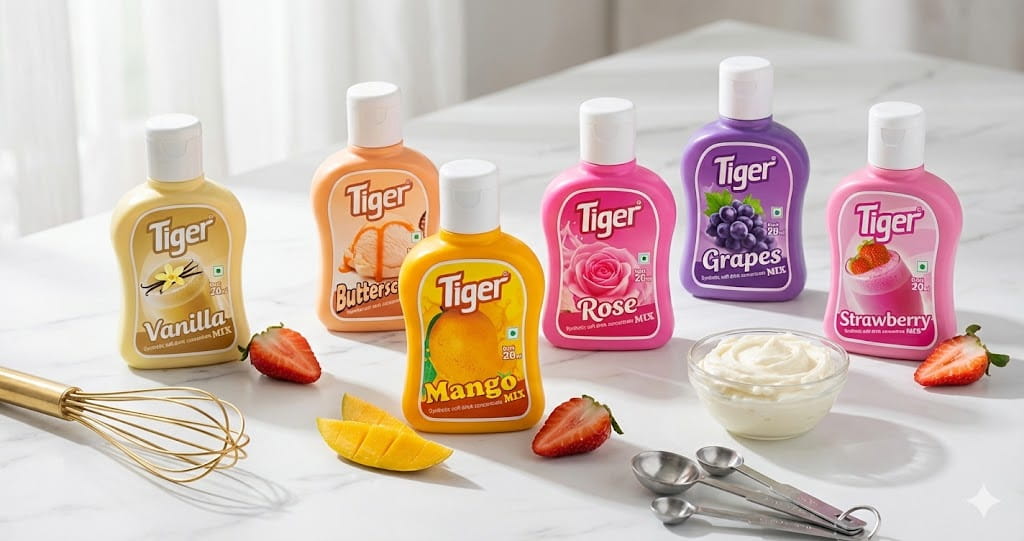
Finding reliable, food-grade baking emulsions in India has become easier with specialized baking supply stores. At Bakeyy, we stock a complete range of professional-grade baking emulsions including vanilla, butter, strawberry, coconut, pineapple, orange, and rose flavors from the trusted Tiger brand—used by professional bakeries across India.
Whether you're a home baker looking to elevate your cake game or a professional bakery seeking consistent, commercial-grade ingredients, our emulsion collection offers the quality and variety you need. We also provide premium cake packaging to present your beautifully flavored creations.
Final Thoughts: Making the Switch to Emulsions
Transitioning from extracts to emulsions might seem like a small change, but the impact on your baking can be significant. The improved heat stability and consistency can transform good cakes into exceptional ones—the kind that have customers asking, "What's your secret?"
Start with vanilla emulsion as your gateway product. Use it in your next vanilla cake recipe and compare the results side-by-side with your extract-based version. The difference in how the flavor holds up during baking will likely convince you immediately. From there, explore fruit flavors like strawberry and pineapple for seasonal offerings, or butter emulsion to enhance your signature butter cakes.
Remember, professional-quality results come from professional-quality ingredients. While good technique and quality recipes matter, the ingredients you choose set the foundation for everything you create. Baking emulsions give you that professional edge—delivering consistent, heat-stable flavor that keeps customers coming back for more.
Ready to experience the difference? Explore our complete collection of baking emulsions and ingredients at Bakeyy and discover why professional bakers across India are making the switch.
Shop Professional Baking Emulsions at Bakeyy
Transform your baking with our range of high-quality Tiger brand emulsions. Available in vanilla, butter, strawberry, coconut, pineapple, orange, and rose flavors.
Browse Baking Ingredients →